Smart Car Charger: Top Picks, Features, and Buying Guide
Smart car chargers keep phones and tablets powered during drives. These days, they do more than just top up a battery.
Modern models offer fast charging, multiple ports, wireless pads, and safety features that protect devices from overheating and surges. I’ll break down how these chargers fit different needs—quick top-ups for short trips or keeping a bunch of devices going on long drives.
Choosing the right charger comes down to a few key factors. Charging speed (wattage and protocol like PD or Qualcomm Quick Charge) matters, as do port type and number, and built‑in safety features like temperature and voltage protection.
The most important thing is matching the charger’s output and ports to your devices so they charge fast and safely. I tested and compared several top models to find the chargers that balance speed, reliability, and value.
Smart Car Chargers
I tried out top smart car chargers to find reliable options for fast charging, safety, and easy use. Here’s my list of the best chargers that work with most phones and devices.
LISEN Retractable Car Charger

If you want tidy, fast charging in the car without messy cables, I recommend this one.
Pros
- Keeps cables neat with retractable cords.
- Charges multiple devices at once with strong USB-C power.
- Built solid and stays put on rough roads.
Cons
- Not for data transfer or CarPlay use.
- Retractors can snag if pulled too fast.
- Only fits 12V cigarette lighter sockets, not USB ports.
I used this on errands and a long road trip. The retractable cables cut down on clutter in the cup holder and back seat.
Having USB-C and an extra USB-A meant my phone and a tablet charged together without swapping cords. The firm metal body felt sturdy when the car hit bumps, and the 180° angle kept the cable line where I wanted it.
The fast 45W USB-C gave my phone a noticeable boost. The extra ports handled passengers’ gadgets.
A few times the retractors hesitated when I pulled too hard, so I learned to extend them slowly. It won’t connect to CarPlay or move data, so I use a separate cable for that.
This charger saved me time and kept the car neater on every drive.
NOCO GENIUS1

If you want a reliable maintainer that revives and keeps batteries healthy without fuss, this small charger is a good pick.
Pros
- Small and easy to tuck away.
- Revived a deeply discharged battery I thought was dead.
- Safe to leave connected for long periods.
Cons
- Slow charge rate for large batteries.
- Occasional disconnects—I had to reattach it now and then.
- Single port limits charging multiple batteries.
I used the GENIUS1 on a motorcycle and an old car battery that sat for weeks. It woke the dead battery and held the charge reliably over several weeks.
The unit felt solid and stayed cool. Temperature compensation kicked in when I moved it between the garage and outside.
Charging felt smart—it adjusted and stopped overcharging, so I didn’t worry about damage while it sat connected. Force Mode pulled a battery from near zero volts back to life, though that took patience.
If you own motorcycles, lawn gear, or a seldom-used car, this is a handy, trustworthy charger.
KENHAO 67W 3-Port Car Charger

I recommend this charger if you want fast multi-device charging on road trips or daily drives. It delivers real speed and solid build quality.
Pros
- Very fast charging for phones and tablets.
- Three ports let me charge multiple devices at once.
- Metal body stays cool and feels sturdy.
Cons
- Fits tightly in some cigarette sockets.
- One-year warranty feels short to me.
- USB-A port is slower than the two USB-C ports.
I used this charger on a long drive and noticed my phone jumped from 10% to about 60% while running maps and music. The two USB-C ports handled my phone and tablet without slowing down.
Plugging three devices in at once didn’t trip the charger. The metal housing reassured me while handling it; it didn’t heat up like cheaper plastic adapters.
The unit sat firmly in my car’s socket, though a friend’s older truck had a loose fit that made it wobble. Cords matter—I paired it with good USB-C cables for best results.
If you need a dependable, fast charger for multiple devices, this one works well in daily use and on trips.
LISEN Mini Dual-Port Car Charger (2-Pack)
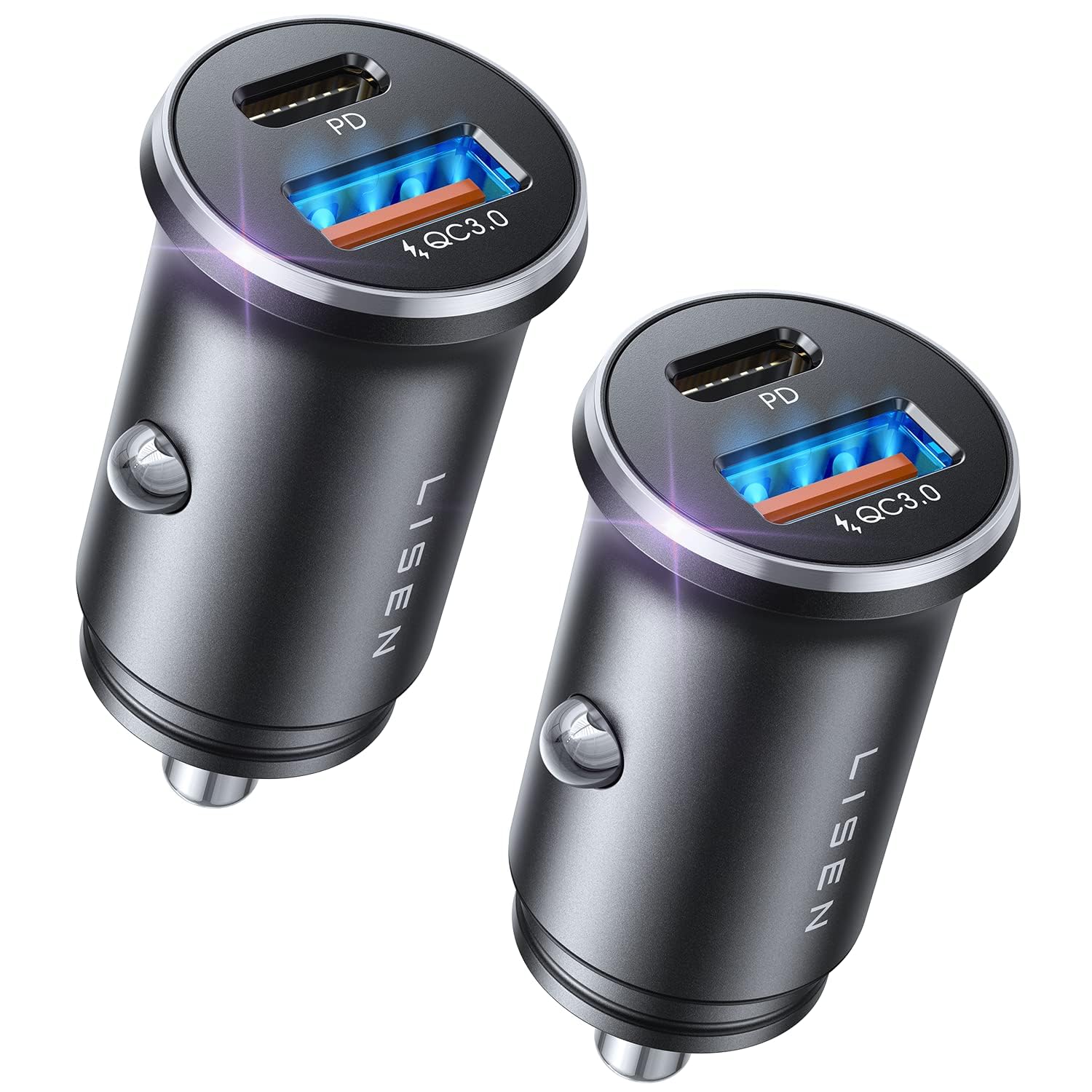
If you want a small, cool-running dual-port unit that reliably tops off phones on daily drives, this is a solid choice.
Pros
- Small, low-profile design that fits flush and hides in the cup of your console.
- Stays noticeably cooler than my old plastic charger under continuous use.
- Good value with two units so I can keep a spare in a second car.
Cons
- Only one port gives full speed at a time, so two devices won’t both charge at peak rates.
- No braided cables included, so you still need good cords for fast charging.
- Metal finish can show fingerprints after a few days in my pocket.
I used the LISEN charger for a week on my commute and a road trip. It slid into my car’s port without sticking out, and the metal body felt solid compared with cheap plastic plugs.
My phone reached a fast-charge level quickly when I used the USB-C PD port alone. Charging a phone and a tablet at once worked, but only one got top speed, which matched the product claim.
Temperatures stayed low even during long drives, and I didn’t smell any plastic heat or melting. Putting two chargers in the glove box proved handy for sharing between drivers.
It’s not the highest-wattage option if you want simultaneous peak charging, but it’s a tidy, dependable choice for most people who want one fast port, a backup, and a neat look.
WODENTA 67W 3-Port Car Charger

If you need very fast charging for multiple devices on the road without fiddling with adapters, I’d go with this one.
Pros
- Charges multiple devices at once without big slowdowns.
- Very fast phone and tablet charging when using the right port.
- Solid feel and comes with a short USB‑C cable.
Cons
- Gets warm under heavy load.
- Short 3ft cable limits where you can place devices.
- White finish shows dirt more easily.
I used this charger during a week of long drives and it saved time. My phone jumped to high charge levels quickly while I ran navigation and played music.
Plugging in a second phone and a tablet at the same time only cut peak speed slightly. The metal housing felt sturdy in the car socket and the ports held plugs firmly.
I liked that it included a USB‑C cable so I could start charging right away. The charger did warm up when I pushed all three ports hard, so I kept it in a ventilated area.
If you want a neat white unit, be ready to clean it more often. It’s a practical, fast option for people who need power for several devices.
Buying Guide
I always start by thinking about my needs. What kind of car do I drive? How often do I actually plug in to charge? That pretty much sets the power and connector requirements right away.
Next, I check the connector type and power output. The charger has to fit my car’s charging port, and I want the right speed for my routine. Adjustable power limits are handy, especially if I’m plugging into different circuits at home or work.
Safety features are non-negotiable for me. I look for ground-fault protection, overcurrent and overvoltage protection, and a weatherproof enclosure that feels like it could survive a storm. It’s not just about the gear—it’s about peace of mind, whether I’m charging at home or out in public.
Smart features? I’m all for them, but only if they actually help. Remote control, scheduling, and energy reporting make it easier to save money and keep tabs on usage. But honestly, if the app’s buggy or missing a feature I need, it’s a dealbreaker.
Installation and compatibility can get tricky. Some chargers need a dedicated 240V circuit, which means calling in a licensed electrician. I double-check local electrical codes and think about load management if I’m planning for more than one EV in the driveway.
Durability and warranty matter more than I thought at first. I check what the casing’s made of, how flexible the cable feels, and how long the warranty lasts. A longer warranty usually tells me the company stands behind their product.
Price is always a balancing act. Sometimes paying more upfront gets me faster charging, a better app, or just something that’ll last longer. I make a checklist of what I absolutely need versus what’s just nice to have before I decide.
| Feature | Why it matters |
|---|---|
| Connector type | Ensures fit with your car |
| Power output (kW) | Determines charging speed |
| Safety protections | Prevents electrical hazards |
| App and smart controls | Enables scheduling and monitoring |
| Installation needs | Affects cost and practicality |
| Warranty & build | Indicates reliability and support |
Best Smart Label Printers for Home and Business Use: Top Picks and Buying Guide - Ruijiayu
16 6 月, 2026 @ 5:02 下午
[…] Simple USB hookup and included power/USB cables […]