Smart Speaker Buying Guide: Features, Setup, and Top Picks
Smart speakers put voice control, music, timers, and smart-home hubs into a single compact device that lives on a counter or shelf. I use them to set reminders, play music, answer quick questions, and control lights without leaving the couch, and their value comes from combining constant availability with growing integrations across services and devices.
Choosing the right smart speaker comes down to sound quality, voice-assistant ecosystem, privacy controls, and compatible smart-home protocols; sound and the assistant platform matter most because they determine daily enjoyment and long-term usefulness. I tested a range of speakers to pinpoint which ones balance audio performance, reliable voice recognition, and sensible privacy features so you can pick the best option for your home.
Best Smart Speakers
I tested and researched a wide range of smart speakers to find options that balance sound quality, voice assistant performance, and smart-home compatibility. Below is my curated list of the best smart speakers available, organized to help you pick the right model for your needs.
Echo Dot (5th Gen)
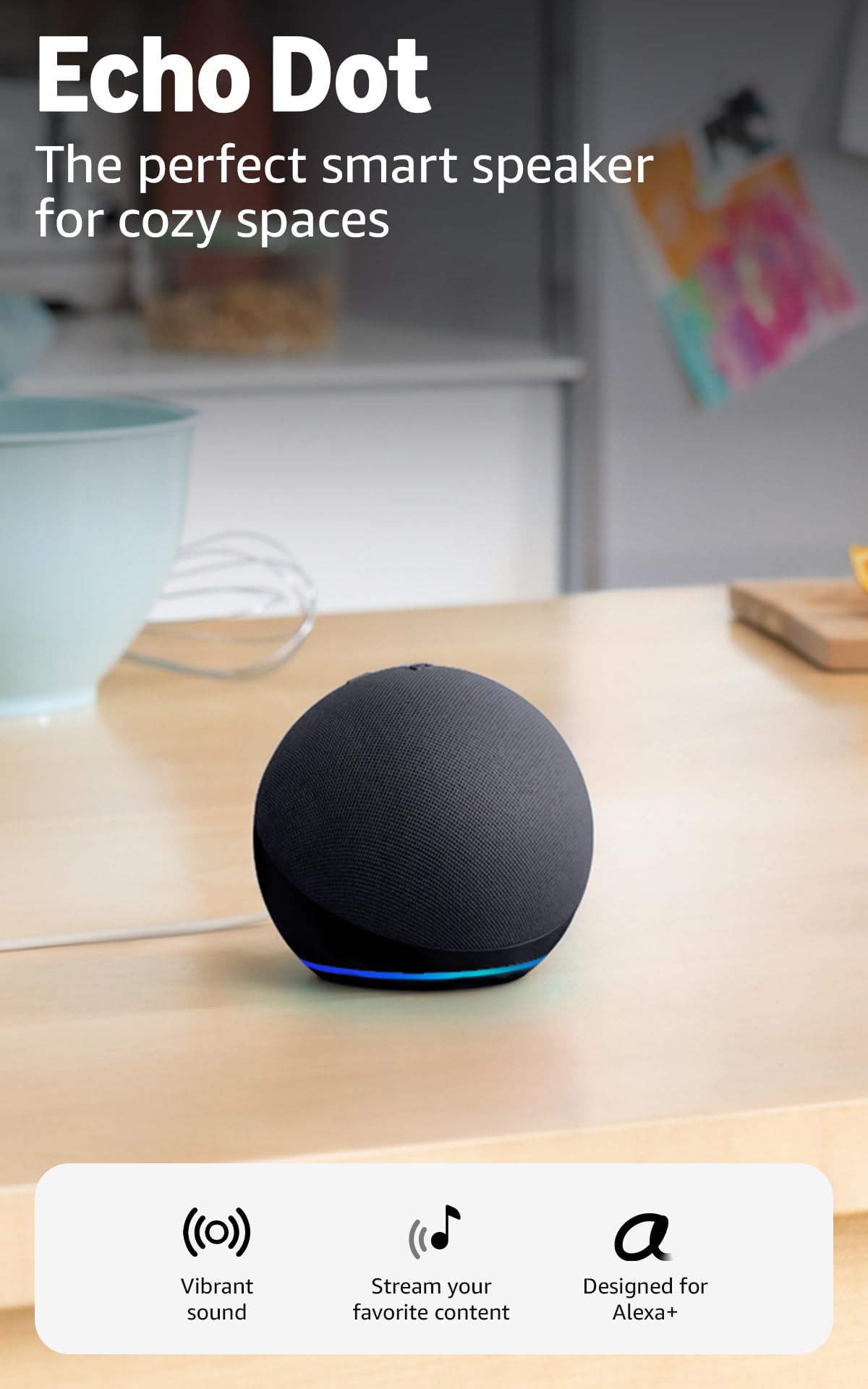
I recommend this Echo Dot if you want compact, clear sound and seamless Alexa control in small rooms.
Pros
- Sound punches above its size for music and podcasts.
- Alexa responds quickly and handles routines easily.
- Simple setup and good smart-home integration.
Cons
- Mono speaker lacks deep bass at higher volumes.
- Limited audio staging for larger rooms.
- Some privacy features require manual checks.
I used this Dot across my bedroom and office for several weeks. Voice responses felt immediate, and the speaker produced fuller mids than I expected for casual listening.
Routines and smart-home commands worked without fuss. I set lights to trigger on motion and used temperature-based routines; both behaved reliably during daily use.
Streaming from my phone and Spotify connected smoothly over Bluetooth. When I pushed volume past mid-level the sound became thin, so I kept it comfortable rather than loud.
Amazon’s privacy controls are visible and easy to toggle, but I still double-check settings in the Alexa app. Pairing multiple Echos for multi-room audio needed a quick app tweak, after which playback stayed in sync.
Overall, this Echo Dot fits bedrooms, kitchens, and offices where compact size and responsive voice control matter more than booming audio.
Echo Dot (5th Gen)
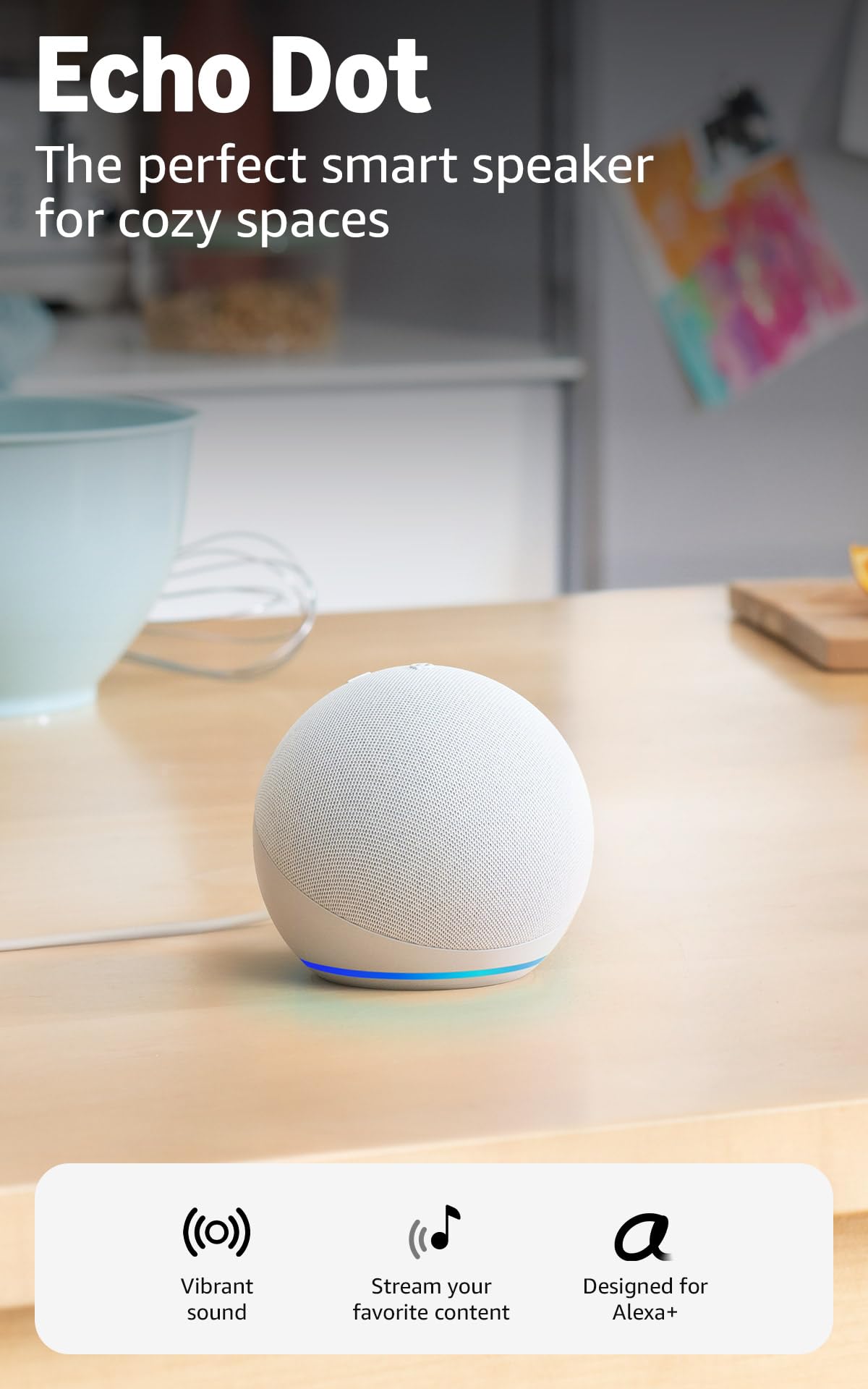
I recommend this Echo Dot if you want compact, reliable voice control and surprisingly good room-filling sound for its size.
Pros
- Clear, full sound for a tiny speaker.
- Fast, useful Alexa responses and easy smart-home control.
- Simple setup and seamless multi-room pairing with other Echo devices.
Cons
- Mono output limits bass and stereo depth.
- Occasional privacy concerns if you want minimal cloud interaction.
- Motion and temp sensors are basic compared with dedicated sensors.
I used this Echo Dot around the house for a week and found the audio punchy for podcasts and background music. It handled voice commands quickly and recognized me across different rooms without much trouble.
I set up routines to turn lights on and off and liked that Alexa triggered them reliably when motion picked up. Creating timers and asking for weather or quick facts felt natural; Alexa’s responses were prompt and usually accurate.
Putting two Dots in different rooms made multi-room music simple to manage from the app. If you care about immersive, high-fidelity listening, this isn’t a replacement for larger speakers, but for bedrooms, kitchens, or offices it hits the sweet spot between price and capability.
Echo Show 5 (3rd Gen)
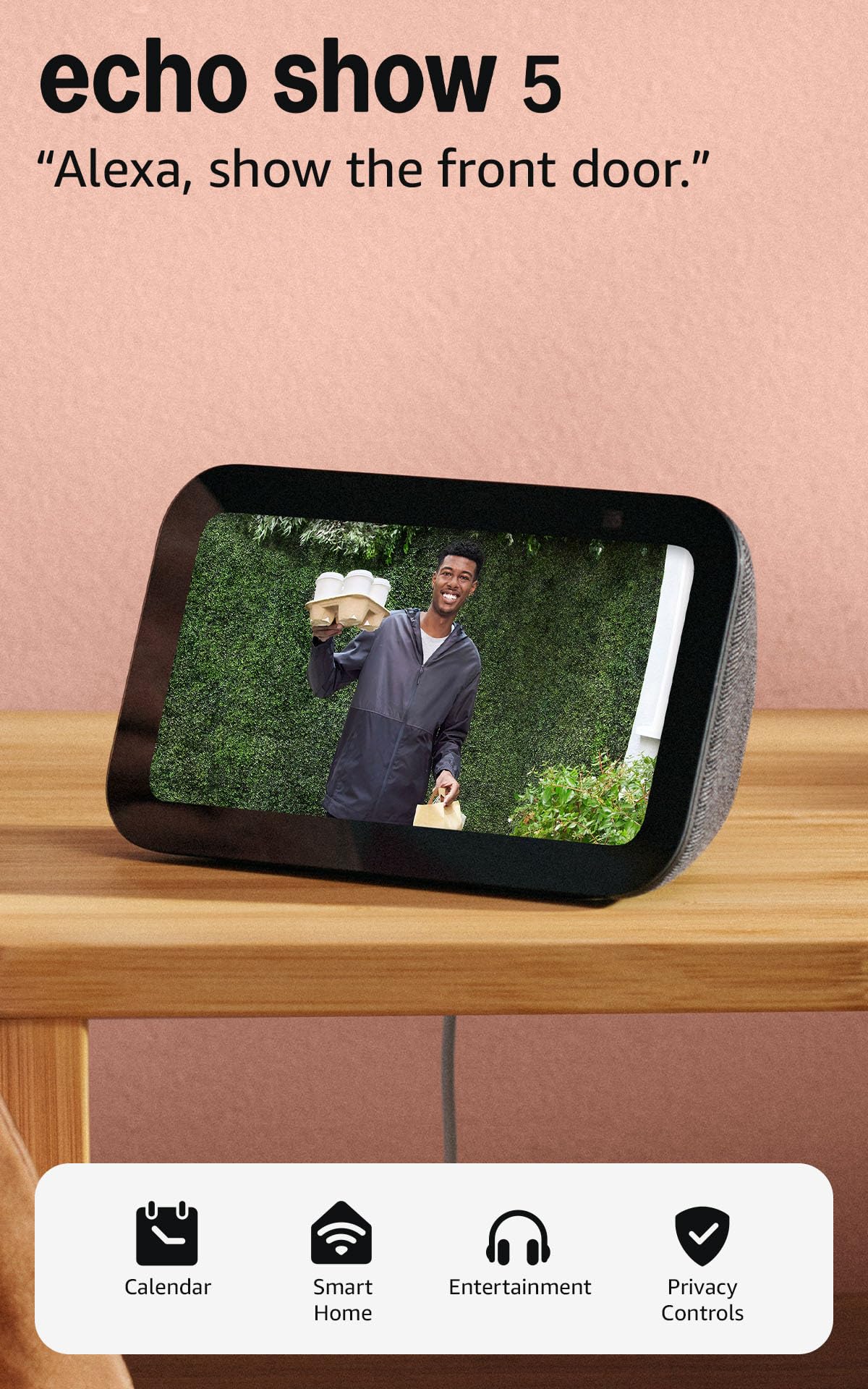
I recommend this compact smart display if you want clear sound, a usable screen for quick info, and simple smart-home control without taking up much space.
Pros
- Small footprint fits on a nightstand or kitchen counter.
- Noticeably better bass and clearer vocals than older Echo Minis.
- Built-in camera and display make video check-ins and quick visual info easy.
Cons
- Screen is handy but too small for long video viewing.
- Camera quality is basic—fine for check-ins, not detailed video.
- Some smart features feel tied to Amazon services more than alternatives.
I set this on my bedside table and used it for a week as an alarm, music player, and quick visual hub. Waking to the time, weather, and news headlines felt smoother than using voice alone.
Music sounded fuller than I expected from a device this size; podcasts and spoken-word content came through very clear. Streaming a short recipe clip in the kitchen worked well, but I wouldn’t use it as a primary video screen.
The camera made it easy to check on the dog and to drop in on another Echo in the house. Video calls were quick and convenient, though the 2 MP image is clearly basic.
Privacy controls gave me confidence: the hardware shutter and mic/camera off button were simple to use. I appreciated the recycled materials and small physical footprint when thinking about where to place it in my home.
If you want a compact, hands-on Alexa with a screen for quick visuals and improved sound over older models, this Echo Show 5 delivers practical everyday value.
Echo Dot (5th Gen) — Deep Sea Blue
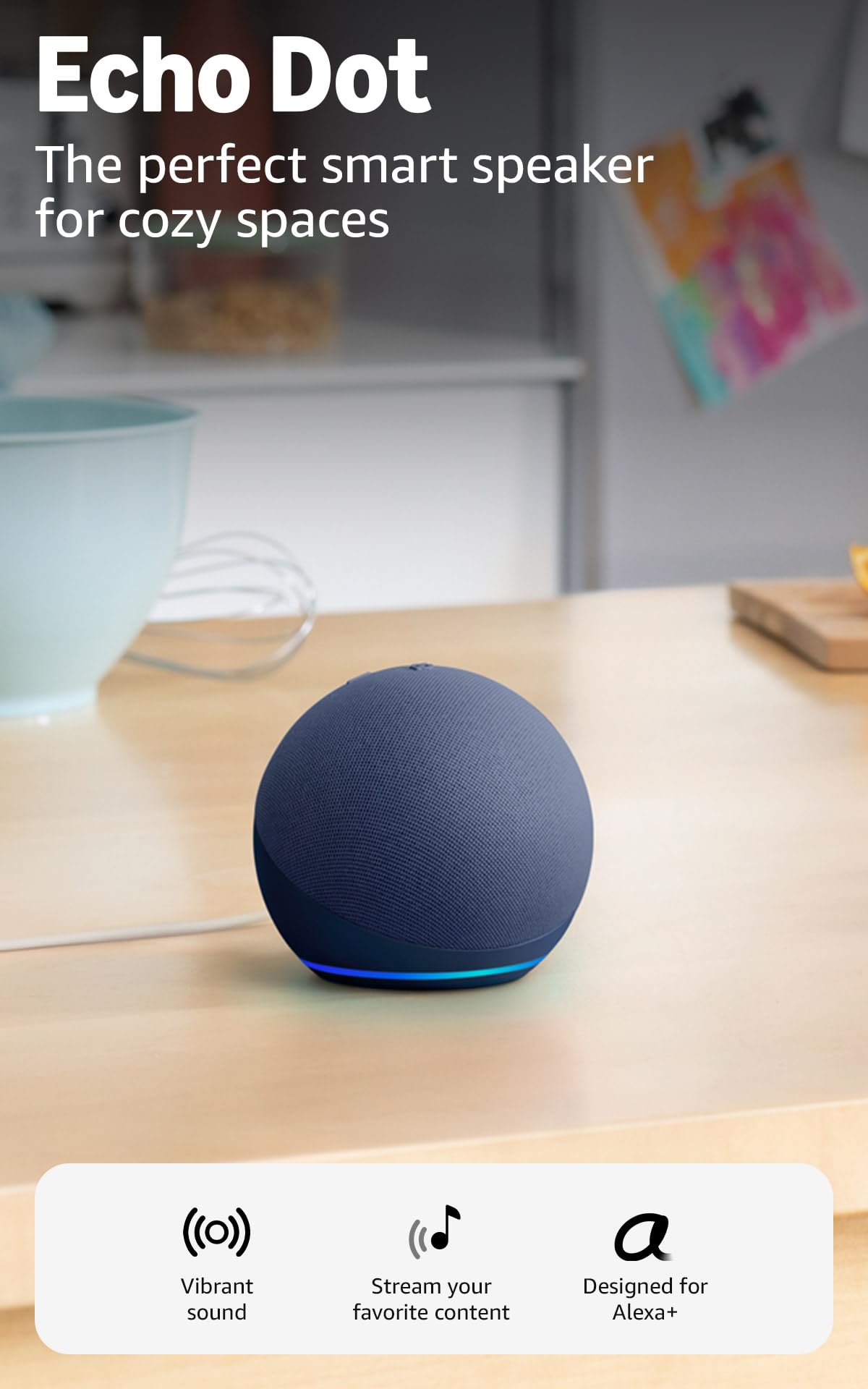
I recommend this Echo Dot if you want a compact, voice-first speaker that handles daily tasks and music well for small rooms.
Pros
- Clear, surprisingly full sound for its size.
- Alexa responds quickly and makes routines simple.
- Easy setup and smooth streaming from major services.
Cons
- Mono audio limits bass and stereo imaging.
- Privacy controls exist but require digging into settings.
- Best benefits depend on other Amazon devices and services.
I used this Dot around the house for a week and it fit right on a nightstand and kitchen counter without dominating space. Music and podcasts sounded fuller than I expected, though you can tell it’s a single driver when you push volume for bass-heavy tracks.
Voice control felt reliable; Alexa picked up commands across the room and routines triggered as I walked into rooms. I tapped the top to snooze alarms many mornings and the motion/temp-based routines cut on lights and fans at sensible times.
Setup took minutes through the Alexa app and I paired it to my phone and other Echo units without drama. If you want richer sound, pair it with another Echo or external speaker, but for everyday use in bedrooms, offices, or small living rooms this delivers consistent performance.
Echo Spot (newest model)

I recommend this Echo Spot if you want a compact bedside smart display with better sound and useful daily routines.
Pros
- Small footprint fits easily on a nightstand or kitchen counter.
- Clear vocals and deeper bass than other small Echo devices.
- Bright touch display makes alarms, weather, and song titles easy to glance at.
Cons
- Screen is small for video or detailed visuals.
- Not ideal as a primary speaker in large rooms.
- Some advanced Wi‑Fi features require an eero network to get full benefit.
I set this on my nightstand and liked how quickly it integrated into my morning routine. The auto-dimming display stops being a distraction at night, and the alarm + gradual light routines woke me without jarring sounds.
Sound surprised me for the size: vocals come through clearly and bass feels fuller than a typical clock speaker. I asked Alexa for music and podcasts throughout the day and rarely noticed dropouts in a normal home setup.
Touch controls work well for quick skips and volume adjustments, though the screen’s small size limits what you can comfortably navigate. Privacy controls are straightforward; the mic-off button gives me confidence when I need it.
Setting up smart-home actions was simple, and I used motion-based routines to automate lights and thermostats. If you already use an eero system, the built-in features can improve coverage, but that’s optional for basic use.
Overall, I found the Echo Spot a polished, practical bedside smart clock that blends voice, sound, and a concise screen into a useful daily helper.
Buying Guide
I check the audio quality first because clarity and bass balance determine daily use satisfaction. Look for specs like frequency range, driver size, and whether the speaker supports higher-resolution codecs; test with familiar music when possible.
I evaluate voice assistant capability and local processing. Prioritize devices that offer fast voice recognition, clear microphone arrays, and privacy controls such as mute or local wake-word processing.
I weigh smart home compatibility and connectivity options. Ensure support for the protocols and devices you already own, and look for multi-room features, Bluetooth, Wi‑Fi, and reliable app control.
I consider physical design, placement, and durability. Think about size for the intended room, power requirements, and materials that affect sound and longevity.
I compare privacy and security features. Check for on-device controls, data retention policies, and whether voice data can be deleted or stored locally.
I balance features against price and update support. Favor products with clear software update commitments and a transparent roadmap for new features.
I use the table below to compare priorities quickly.
| Priority | What I check | Why it matters |
|---|---|---|
| Sound | Frequency range, drivers, codecs | Affects clarity and music enjoyment |
| Voice | Mic array, wake-word, local processing | Determines reliability and privacy |
| Connectivity | Wi‑Fi, Bluetooth, protocols | Ensures device interoperability |
| Controls | App, physical buttons | Impacts ease of daily use |
| Security | Data policies, mute switch | Protects personal information |
| Support | Updates, compatibility | Keeps device useful over time |
Frequently Asked Questions
I break down practical setup steps, compatibility details, and sound-performance differences so you can choose and use a smart speaker with confidence. Expect clear comparisons of features, setup options, smart-home integration, and which models excel at audio.
What features should you compare when choosing a voice-controlled home speaker?
I compare audio quality (driver size, frequency response, and stereo vs mono) and microphone array performance for wake-word detection and far-field pickup.
I assess voice assistant capabilities, supported music services, and whether the speaker supports multiroom audio or Bluetooth/aux input.
I check smart-home hub support, including Zigbee, Thread, or Matter compatibility, plus compatibility with the devices you already own.
I also consider physical controls, privacy features (microphone mute, local processing), and software update policies.
Can a voice assistant speaker be set up and used without a smartphone?
Some speakers allow initial setup via a web interface or a desktop app, but most major brands require a smartphone app for account linking and Wi‑Fi configuration.
I recommend checking the manufacturer’s setup instructions before purchase if you want to avoid using a phone.
After initial setup, many speakers can perform core functions—music playback, timers, and smart-home control—without continued smartphone access.
However, advanced settings, adding skills, or linking new services often still require the app.
What is the difference between a traditional Bluetooth speaker and a voice assistant speaker?
A Bluetooth speaker primarily focuses on wireless audio playback from a paired device and usually lacks onboard voice processing or cloud-based assistants.
A voice assistant speaker adds far-field microphones, an internet connection, and a cloud assistant for voice commands, streaming directly from services, and smart-home control.
Bluetooth speakers can be simpler to manage and sometimes offer better battery-powered portability.
Voice assistant speakers often sacrifice portability and battery life for always-on connectivity and voice features.
Which models deliver the best sound quality for music streaming?
I consider models with larger drivers, dedicated tweeters, and passive radiators for fuller bass and clearer highs.
Examples that consistently rate highly in tests include higher-end Sonos models, Amazon Echo Studio, and Apple HomePod (where still available), each tuned for room compensation and richer stereo imaging.
I recommend auditioning speakers with music you know, and comparing streaming codec support such as Apple Lossless, FLAC, or Spotify Connect when sound fidelity matters.
Room size and placement significantly affect perceived quality, so factor in speaker power and acoustic treatment.
Is a display-equipped voice assistant speaker worth it for daily use?
A screen adds visual feedback for timers, video calls, recipes, and quick info like weather or calendar events, which I find increases daily usability.
If you often video-call, follow step-by-step recipes, or depend on visuals, a display is valuable.
For basic music playback, voice control, and smart-home commands, a display is optional and increases cost and power use.
I weigh how often I would use the visual features before choosing a display model.
How well do voice assistant speakers work with popular smart home devices and ecosystems?
Compatibility varies by ecosystem: Amazon Alexa supports a very broad range of third-party devices, Google Assistant integrates well with Nest and many Matter devices, and Apple HomePod works best within the HomeKit ecosystem.
I check specific device compatibility lists and Matter support to ensure cross-platform device control.
Integration quality also depends on device manufacturers’ implementation of skills or local control.
For reliable automation, I prefer devices that offer local control and Matter certification to reduce cloud dependency.
Best Smart Hose Timer: Top Picks and Buying Guide for Precise Garden Watering - Ruijiayu
27 5 月, 2026 @ 1:10 下午
[…] timers range from simple battery-powered dials to smart models that link to your phone, weather forecasts, and voice assistants. That means your watering can adjust itself […]
Best Smart Bulb Guide for 2026: Top Picks, Features, and Setup Tips - Ruijiayu
28 5 月, 2026 @ 3:58 下午
[…] what network they use—Wi‑Fi, Bluetooth, or Zigbee. Make sure your bulbs match your smart hub or voice assistant, and check the lumen rating for real brightness instead of just […]
Smart Speakers: Is Anker Soundcore 2 the Best Bluetooth Pick? - Ruijiayu
8 6 月, 2026 @ 5:58 下午
[…] buttons were simple to use—I didn’t need to check the manual. Sound surprised me for the size; bass hits deeper […]
Best Smart Sleep Masks for Better Rest and Travel Comfort - Ruijiayu
12 6 月, 2026 @ 6:43 下午
[…] wake up less groggy. They block light like regular masks but add features such as gentle alarms, built-in sound, temperature control, or eye-position sensors to improve sleep quality and help you keep a steady […]
Best Smart Scales: Top Picks for Accuracy, Features, and Value - Ruijiayu
13 6 月, 2026 @ 2:49 上午
[…] setup and clear data history make tracking so much simpler. If it takes ages to connect, I lose patience […]
EVISTR 64GB Digital Voice Recorder Review: Worth Buying? - Ruijiayu
6 7 月, 2026 @ 5:39 下午
[…] simple controls stood out, and I liked the voice-activated mode for cutting down silent gaps. I did have to tweak […]