Best Smart Hose Timer: Top Picks and Buying Guide for Precise Garden Watering
Smart hose timers let you water your lawn and garden on a schedule. No more dragging hoses or remembering to turn faucets on and off.
These timers range from simple battery-powered dials to smart models that link to your phone, weather forecasts, and voice assistants. That means your watering can adjust itself automatically.
I focus on how well each timer keeps plants healthy, saves water, and stays reliable through the seasons. Not all timers are created equal, and some just work better than others.
The hardest part of picking a smart hose timer? Matching features to your actual needs. Connection type (Bluetooth or Wi‑Fi), app quality, weather-based scheduling, power source, and outdoor durability all matter.
Honestly, the most important thing is finding a timer with a solid connection and a clear app, so watering happens when you want it. I tested and compared models to find the ones that make watering simple and worry-free.
Best Smart Hose Timers
I tested top smart hose timers to find options that make watering easier and save water. Here’s my list of the best for reliability, app control, and value.
Orbit Timer (Programmable)
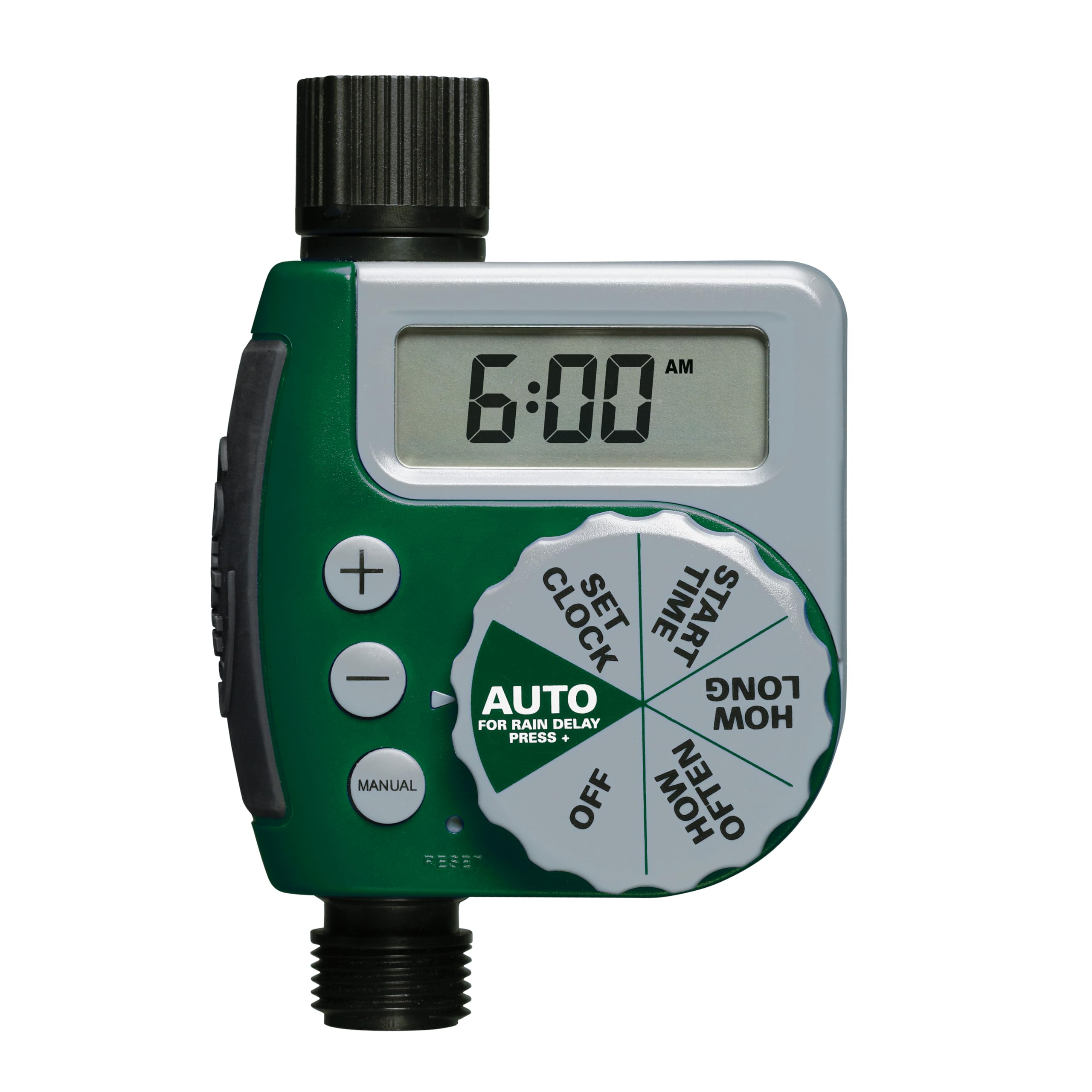
I recommend this Orbit timer if you want a simple, reliable way to automate a single faucet. No need to pay for complex smart systems.
Pros
- Easy to set up and program with the single dial.
- Durable in outdoor use and handles regular watering well.
- Built-in rain delay saves water when it’s wet.
Cons
- Not smart-home compatible — no app or Wi‑Fi control.
- Uses batteries that need seasonal replacement.
- Basic features only; limited for complex irrigation needs.
I installed this Orbit unit on my side faucet and started using it the same afternoon. The LCD and one-dial control made programming fast; I had a watering plan set in minutes.
It ran my drip lines and small sprinklers without choking flow. The rain delay worked as expected when a storm moved through.
I flipped it on for 48 hours and the timer skipped the cycle cleanly, so I didn’t waste water or drown the flower beds. The plastic housing feels sturdy and has survived sun and heat in my yard.
Battery life varies with use, so I swap them each season to avoid dead cycles. For a straightforward, low-cost solution to automate one hose, this Orbit is practical and dependable.
Insoma Hose Timer
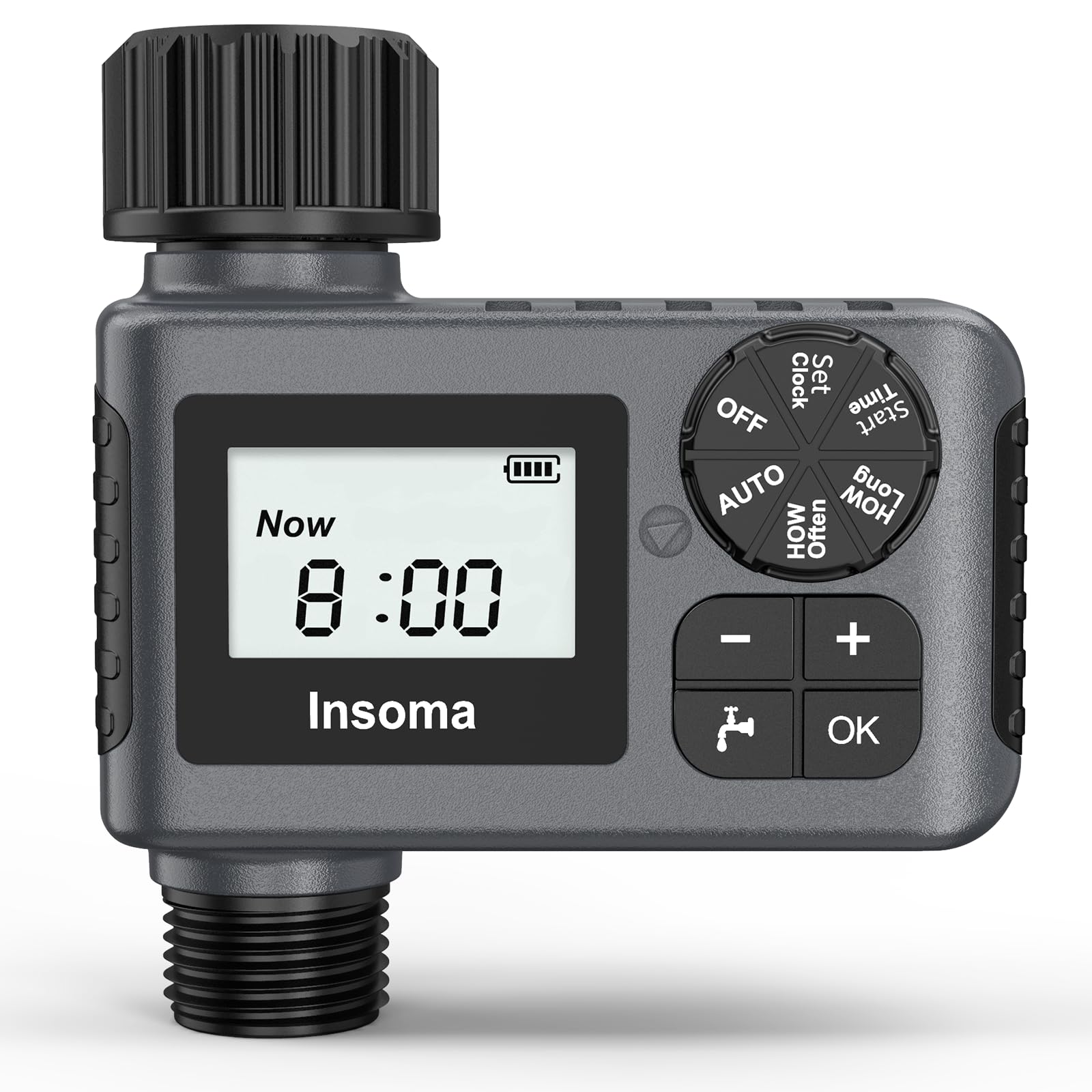
I recommend this if you want a simple, durable timer that handles basic schedules without smart home features.
Pros
- Easy to set up and program by turning the dial and pressing buttons.
- Feels sturdy and weatherproof in real outdoor use.
- Large screen and child lock make it simple to check and protect.
Cons
- Not Wi‑Fi or app enabled, so no remote control.
- Instructions can be small or only in English, which confused me at first.
- Uses AA batteries that need replacement every few months.
I hooked this up to my backyard faucet and ran a few cycles. The dial and buttons made programming quick once I read the layout.
It kept to the schedule exactly and I liked seeing settings on the big LCD. Leaks were not an issue for me.
The unit sealed tightly and the included tape and adapter fit my hose threads. The plastic feels reinforced, and it stood up to sun and rain during the test week.
Manual and rain-delay options came in handy. I could pause watering when it rained and use manual mode to water a new bed without wiping out the main schedule.
If you need full smart home control, look elsewhere. For plain, reliable automated watering that I could set and forget, this Insoma timer did the job well.
RAINPOINT Sprinkler Timer

I recommend this if you want an affordable, easy-to-program hose timer that mostly works well but can feel a bit plastic and fragile over time.
Pros
- Simple setup and clear controls.
- Large LCD makes programming easy.
- Useful rain delay and manual modes.
Cons
- Feels lightweight; not as rugged as metal units.
- Can reduce water pressure slightly.
- Battery life varies with exposure.
I hooked this up to my patio hose and I liked how fast I had a schedule running. The dial and screen are clear, so I didn’t need to dig into the manual much.
It handled daily short runs without a fuss. After a few weeks it stayed watertight where it connects to the spigot.
I used the rain delay when a storm was coming and the timer paused and restarted as expected. Manual mode let me run longer soak cycles for potted plants without changing the main schedule.
The plastic housing makes it light, which is good for moving it around, but I worry about long-term outdoor wear if it sits in full sun or harsh winter. I also noticed a small drop in flow with low-pressure systems.
Buy or learn more: RAINPOINT Sprinkler Timer
Rainpoint 2-Zone Water Timer

I recommend this if you want a sturdy, easy-to-use two-zone hose timer that saves time and handles most yard setups.
Pros
- Two independent zones let me water different areas without swapping hoses.
- Big dial and display made setup fast and clear for me.
- Solid build and good flow — it felt more durable than cheap timers I’ve tried.
Cons
- Connection can be finicky on older, rusty faucets.
- Battery power means I have to check and swap cells sometimes.
- A few users reported leaks over long use, so expect occasional service needs.
I installed this on my backyard faucet and got both zones running in minutes. The 360° dial helps when the spigot sits in an awkward spot.
The large buttons work even with wet hands. Water flow felt stronger than other plastic timers I used.
The unit did not choke the line, and the rain delay stopped watering during a few stormy days. Programming is simple: set current time, start time, duration, and interval.
I liked having three manual options for on-the-fly watering without redoing the schedule. The casing seems waterproof and the display stays readable in bright sun.
After a few weeks I noticed the low-battery warning pop up, so I swapped batteries to keep the valve reliable. If your faucet is old or corroded, plan for a tighter connection or an adapter — mine fit well on newer spigots but felt loose on one rusty pipe.
Overall, this handled my routine watering with little fuss.
Rachio 8-Zone Smart Controller

I recommend this if you want precise, app-driven watering that actually cuts waste and runs reliably for most home yards.
Pros
- Easy app control from anywhere.
- Weather-based skips that really reduced unnecessary runs.
- Fast DIY install for standard systems.
Cons
- App-only scheduling feels limiting if you prefer on-device setup.
- Needs a weatherproof box for outdoor installs.
- May need a pump with some well systems.
I installed the Rachio on my 8-zone system and set it up in under an hour. The wiring was straightforward and the app walked me through each step.
I liked pressing Quick Run buttons to test zones while standing by the valves. After a few weeks the Weather Intelligence adjusted my schedule when storms came through.
My lawn got what it needed without me babysitting timers. The app shows estimated water use, which made it easy to see savings over the old dial controller.
The unit stayed connected to Wi‑Fi with no weird dropouts on my dual-band router. Voice control with my smart speaker worked fine for quick commands.
If you use a well, plan for a pump; I had low pressure until I added one. It prefers app control, so people who want physical programming on the box may find that awkward.
Still, for remote control, smart skips, and a clean install, it performed well in my yard.
Buying Guide
I always start with the basic fit. First, check the hose connection size.
Make sure the timer matches your faucet or spigot. If it doesn’t, you’ll end up frustrated before you even start.
Next, I look at power options. Battery, solar, or hardwired setups all have their own quirks.
Think about where you want to put the timer. Battery models need recharging or fresh batteries, while solar and hardwired types have their own pros and cons.
Control and scheduling features matter a lot. I want easy app control, manual override, and flexible programming.
Multiple zones and cycles per day or soak cycles can make life easier. The more flexibility, the better, honestly.
Durability and weather resistance? Non-negotiable for me. A water-resistant case and UV-resistant plastic help it survive outside.
Metal parts should resist rust, or you’ll be back shopping again in no time. Good seals keep the insides dry.
Connectivity and range come next. Wi‑Fi lets you control things from anywhere, but Bluetooth is fine if your garden’s close by.
If you want voice assistant support, check if the app can do that. Not everyone cares, but it’s handy if you do.
Valve type and flow rate limits can surprise you. Some timers restrict water pressure or flow, which could mess with your irrigation setup.
Always match the timer specs to your sprinklers or drip lines. Otherwise, you’ll end up disappointed.
Sensor compatibility is worth a look. Rain, freeze, or soil sensors can save water and prevent headaches.
Just make sure the timer actually supports the sensors you want to use. Otherwise, what’s the point?
Ease of installation and use is huge. I prefer simple mounting, a clear display, and an intuitive app.
Good manuals, tutorials, or responsive customer support can save you hours of hassle.
Last thing—I always compare warranties and support. A clear warranty and reachable support team offer peace of mind.
| Feature | Why it matters |
|---|---|
| Connection size | Ensures fit with faucet |
| Power type | Affects placement and maintenance |
| Scheduling controls | Determines flexibility |
| Weather resistance | Improves lifespan |
| Sensor support | Saves water and prevents damage |
| Warranty/support | Protects your purchase |
MOVA LiDAX Ultra 1000 Review: Smart Robomower for 1/4 Acre? - Ruijiayu
13 7 月, 2026 @ 3:29 下午
[…] life and smart resume worked well. When it went back to charge, it picked up where it left off, so there weren’t any […]