Smart Door Lock: Secure Home Access Guide and Comparison
Smart door locks replace traditional keyed deadbolts with electronic access control that you operate by smartphone, keypad, fingerprint, or voice assistant. They simplify entry for residents and guests, let you grant time-limited access, and can log who comes and goes—features that appeal to busy households, rental hosts, and anyone who dislikes fumbling for keys. I focus on models that balance security with everyday convenience so readers can choose a lock that fits their routine.
Choose a smart lock based on compatibility with your door and ecosystem, security features, and how you plan to use it. Pay particular attention to whether the lock fits your existing deadbolt, whether it requires a Wi‑Fi hub, the strength of its encryption and tamper resistance, and how reliable its app and firmware updates are. The most important factor is choosing a lock that matches your door hardware and home network while offering strong, regularly updated security and a usable app. I tested and compared locks to identify the best options for different needs, leading into the best-of list and a practical buying guide.
Best Smart Door Locks
I tested and compared top smart door locks for reliability, security features, and ease of use to help you choose the right model. Below is my curated list of the best smart door locks available, organized to match different budgets and needs.
Huglock (SnapPower)
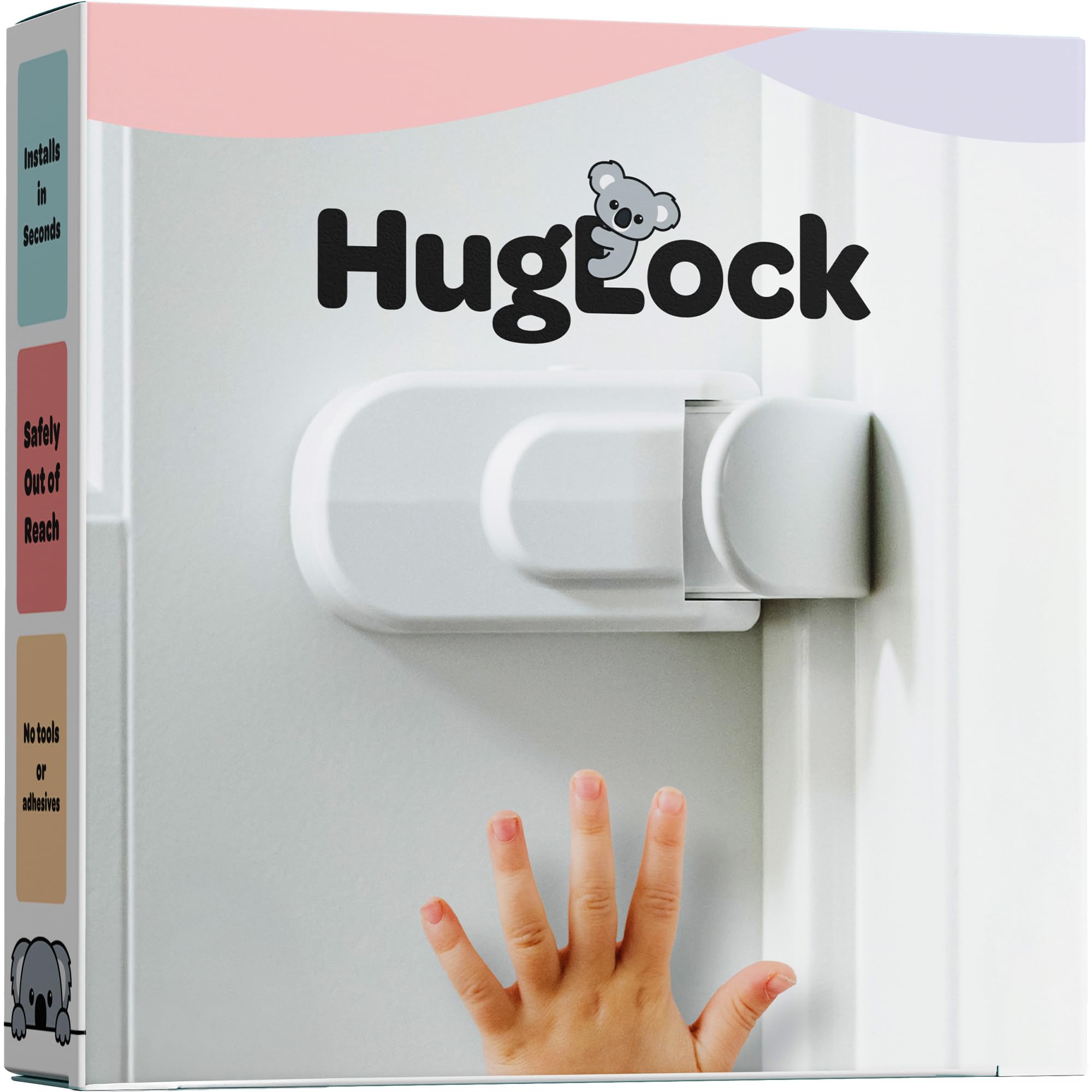
I would buy this if you need a no-drill, out-of-reach childproof lock for interior doors that actually works in daily use.
Pros
- Installs in seconds without tools or adhesives.
- Sits high where kids and pets can’t reach.
- Operates from both sides so adults can open easily.
Cons
- Fits only standard interior doors — not for exterior or garage doors.
- Plastic feels light; some users report durability concerns.
- May need the included spacer for wider doorjambs.
I slid the Huglock onto a bedroom door and it behaved exactly as promised: no drilling, no sticky residue, and immediate peace of mind. The mechanism feels intuitive — push back the latch on one side, slide the release on the other — which made nightly checks faster.
I tested it on both a round knob and a lever handle. It stayed secure and out of reach when mounted higher, and my toddler gave up trying after a few attempts. The product’s light plastic does not inspire confidence for heavy-duty use, but it has held up to everyday opening and closing in my house.
Installation required one small adjustment for my thicker door stop, and the included spacer solved it without fuss. If you rent, care about paint and trim, or need a removable solution, this lock makes sense. For exterior doors or heavy-use entryways, choose a more robust lock instead.
TEEHO TE001 Keypad Deadbolt

I recommend this if you want a straightforward, affordable keypad deadbolt that installs quickly and handles everyday use reliably.
Pros
- Quick, tool-light installation that actually fit my existing hole without fuss.
- Simple programming with multiple user codes and a one-time PIN that worked as advertised.
- Solid feel and weather resistance; the keypad responds well even at night.
Cons
- No wireless integrations — it’s strictly keypad and physical key, so no app control.
- Occasional double-cycle when locking; it sometimes takes a couple tries to seat fully.
- Uses AA batteries and has a low-battery warning, but swapping batteries is still a periodic chore.
I installed this on my front door in about 10 minutes using only a screwdriver. The trim and satin nickel finish looked cleaner than I expected, and the keypad lighting made nighttime entry easy.
Programming the master code and adding user codes felt intuitive; I set family codes and a single-use PIN for a guest, and the temporary code deleted itself as promised. Daily use has been smooth — the buttons are responsive and the deadbolt feels reassuringly solid.
Auto-lock is handy when I leave in a hurry, though I noticed the bolt sometimes cycles twice before settling. Battery life reports are realistic; the low-battery indicator came on before it became a problem, and replacing AA cells is quick.
I appreciate the lack of a learning curve and the practical durability. If you need Wi‑Fi or smart-home links, look elsewhere; if you want a reliable keypad deadbolt at a good price, this one delivered for me.
Yamiry Keypad Smart Knob

I recommend this if you want an affordable, easy-to-install smart knob that adds keypad convenience without replacing your deadbolt.
Pros
- Quick, screwdriver-only installation that fit my existing door holes.
- Responsive backlit keypad and straightforward code management for family and guests.
- Solid aluminum feel and useful auto-lock options.
Cons
- Not a substitute for a heavy-duty deadbolt for main-entry security.
- Exterior handle has occasional durability concerns reported over time.
- Keypad visibility is limited until you press the buttons in low light.
I installed this on my side door in under 20 minutes and appreciated how cleanly it dropped into the existing cutout. Programming codes felt intuitive; I set household codes and a one-time guest code in moments.
The keypad presses are crisp and the backlight helps at night, though the keys remain hard to see until tapped. Auto-lock worked reliably for me when set to a short delay, which reduced the need to carry keys.
Build quality feels good for the price—aluminum hardware and a matte finish that resists fingerprints. I would still keep a separate deadbolt on a primary exterior door, because this knob adds convenience more than hardened security.
If you want a low-cost, code-first entry solution for secondary doors or interior external access, this model performs well and is easy to live with.
Evanshow Fingerprint Door Knob
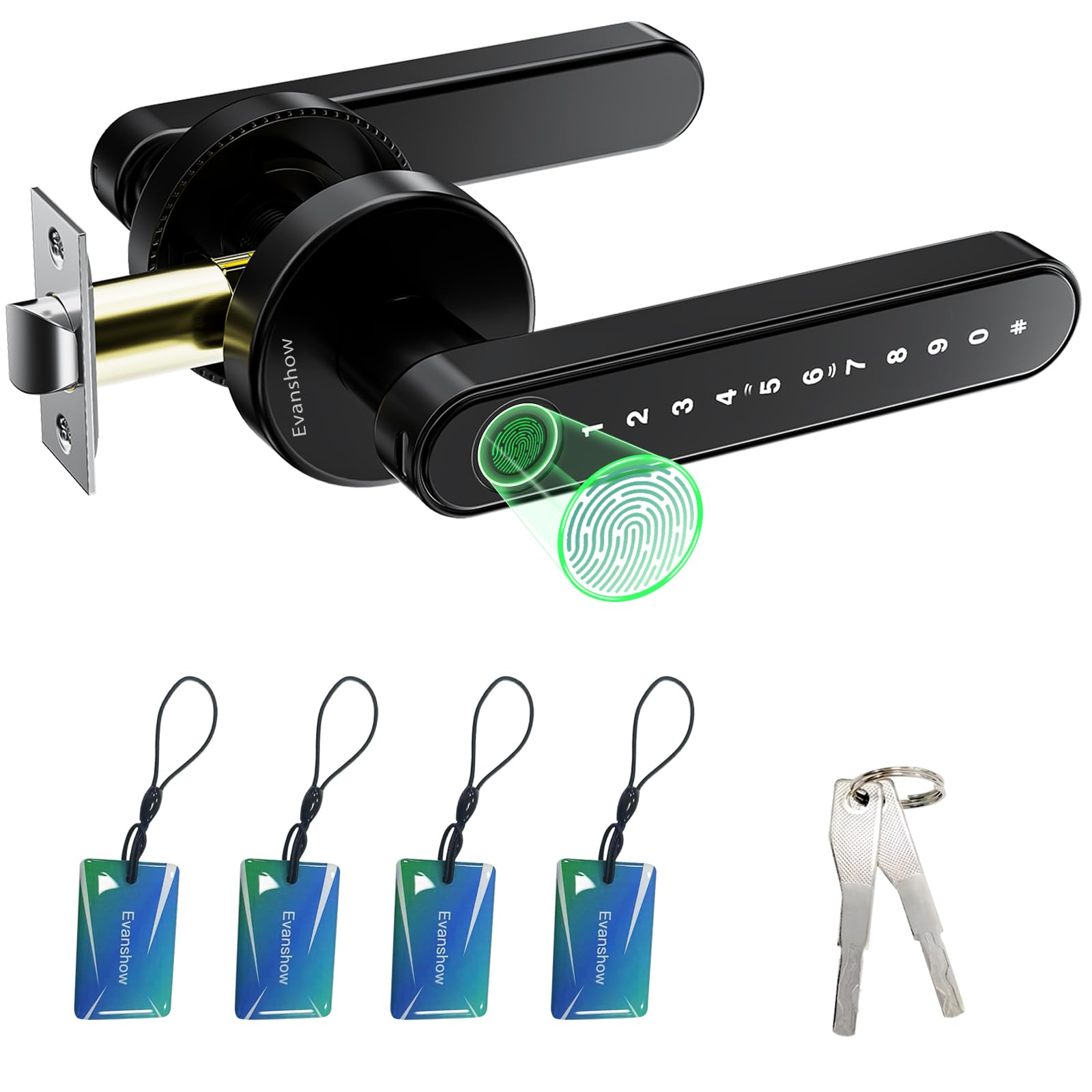
I recommend this if you want a quick, keyless upgrade for indoor doors that balances speed and simplicity.
Pros
- Fast fingerprint reader that usually unlocks in under a second.
- Installs in minutes without drilling or wiring; includes tools and video guidance.
- Supports many users (fingerprints, PINs, cards) so families or offices can share access.
Cons
- Fingerprint consistency can be picky—placement matters for reliable unlocking.
- Handle felt a bit flimsy on one unit after repeated use.
- No built-in Wi-Fi or scheduling features on this model.
I installed this on a bedroom door to replace a traditional knob and the setup was refreshingly straightforward. The included tools and tutorial video made the mechanical part easy, and swapping handedness for my left-swing door was simple.
Using the lock day-to-day felt convenient: the fingerprint scanner was fast most of the time and saved me from fishing for keys. I registered multiple prints and a PIN for guests; the interface walks you through admin setup, which is crucial before first use.
I noticed occasional thumb-placement sensitivity—when I rushed the scan I had to reposition my finger once or twice. The lever felt solid initially, but after several days of heavier use it started to creak and feel a little loose on my sample unit.
This model suits interior doors where you want keyless access without smart-home complexity. If you need Wi‑Fi features or remote scheduling, consider a different variant; for simple biometric entry, this one performs well and installs quickly.
Philips Wi‑Fi Smart Lock

I recommend this lock if you want reliable remote access, fast fingerprint entry, and straightforward DIY installation.
Pros
- Smooth, reliable fingerprint and passcode unlocking.
- Built-in Wi‑Fi means no extra hub and dependable remote control.
- Simple install—I swapped my old deadbolt in about 20 minutes with a screwdriver.
Cons
- Only supports 2.4 GHz Wi‑Fi and prefers router within ~65 ft for best performance.
- Batteries not included; uses 4 or 8 AA cells so plan ahead.
- No door sensor, so auto‑lock can’t confirm door closure.
I installed this on my front door and appreciated how quickly the fingerprint reader recognized me. The keypad feels solid and the app sends near‑instant access notifications when the door opens.
Using voice control with Alexa made hands‑free locking convenient, though I had to update the app and ensure a stable Wi‑Fi connection first. Remote unlock worked reliably from work and on a short trip, which gave me peace of mind.
Setting up multiple temporary codes was easy and useful for cleaners and guests. I missed a built‑in door sensor, however, since the auto‑lock works on a timer rather than door position.
Overall the lock feels secure and well‑built; customer support was responsive when I had a setup question. If you want a robust, user‑friendly smart deadbolt with fingerprint access, this is a solid choice: Philips Wi‑Fi Smart Lock.
Buying Guide
I evaluate smart door locks by first checking compatibility with my door type and existing deadbolt. Measure backset, door thickness, and confirm the lock fits any existing cutouts.
I prioritize security features. Look for strong encryption, two-factor authentication, and tamper detection. Consider locks with automatic relocking and audit logs so I can track access events.
I weigh connectivity and control next. Decide whether I want Bluetooth, Wi‑Fi, Zigbee/Z‑Wave, or a hub-based setup. Each affects range, battery use, and whether the lock works without a hub.
I examine power and battery life. Longer battery life reduces maintenance, but I also prefer clear low‑battery alerts and a backup physical key or external power port for emergencies.
I assess installation and user management. Choose models with DIY installation if I want a simple swap; otherwise plan for professional help. Check how many user codes I can create, whether temporary codes are supported, and how easily I can add or revoke access.
I consider smart‑home integration and voice control. Verify the lock works with my existing ecosystem and what automations are available. I test response time and reliability in my network before committing.
I compare durability and weather resistance for exterior doors. Look for rated materials and an appropriate IP or weatherproofing rating. Read third‑party security assessments and professional installation recommendations where available.
I balance features against price and ongoing costs. Factor in hub, subscription, and replacement battery costs to determine the best overall value for my needs.
Frequently Asked Questions
I focus on practical, testable details: compatibility with door hardware, authentication methods, battery and backup options, and app-level security controls. I also weigh installation complexity, physical-key fallback, and whether the lock supports standard rekeying or SmartKey-style cylinders.
Which features should I compare when choosing a connected door lock for my home?
I compare authentication methods first: Bluetooth, Wi‑Fi, Z‑Wave, Zigbee, keypad codes, and biometric sensors. Each affects range, latency, and whether the lock can be controlled remotely without a hub.
I check integration with my existing smart-home platform (Ring, Alexa, Google Home, HomeKit, SmartThings). Native support avoids extra bridges and reduces complexity.
Battery life and power warnings matter; I prefer models that report remaining battery percentage and send low-battery alerts. Physical-key access and emergency USB or 9V terminals are critical backup features.
I evaluate tamper and forced-entry resistance: ANSI/BHMA grade, deadbolt throw, and reinforced strike plates. Firmware update support and company responsiveness to vulnerabilities affect long-term security.
How reliable is phone-based unlocking versus a keypad or fingerprint option?
Phone-based unlocking using Bluetooth is convenient but depends on device battery, app background permissions, and Bluetooth stability. Wi‑Fi-based remote unlocks work well but expose the lock to internet-side risks if the vendor’s cloud is compromised.
Keypads provide predictable access without needing a phone; they can be more reliable when multiple household members or temporary guests need entry. Make sure codes can be scheduled and audited.
Fingerprint readers are fast and frictionless when sensors are high quality, but performance degrades with dirt, wet fingers, or damaged sensors. I prefer fingerprint as a convenience layer, not the only access method.
Can a connected lock still be used with a physical key if the battery dies?
Most connected deadbolts include a mechanical key cylinder for full manual operation; verify this before purchase. Some designs place the key cylinder on the interior only, so confirm outside-key access exists.
Certain locks offer an external 9V terminal or micro‑USB charging point to provide temporary power for electronic operation. I always keep spare batteries and test mechanical key operation during installation.
What security and privacy protections should I look for in the companion mobile app?
I look for end-to-end encryption of commands and stored logs, not just TLS in transit. Multi-factor authentication, session timeout, and account recovery controls reduce the risk of unauthorized access.
Audit trails with per-user logs and timestamped events help track who entered and when. I prefer apps that allow local control and conditional cloud access to limit data exposure.
Check vendor practices: transparent vulnerability disclosure policies, regular firmware updates, and a clear data-retention and sharing policy. Avoid vendors that collect location or camera data unrelated to lock operation.
How do I confirm a connected lock will fit my existing deadbolt and door thickness?
Measure door thickness and backset (typically 2‑1/4″ or 2‑3/8″) and compare with the lock’s specification sheet. Look for models that support 1-3/8″ to 2″ doors or offer shims and adjustable mounting hardware.
Verify borehole diameter and edge prep match the lock; most replacements fit standard 2-1/8″ holes, but confirm before buying. Read installation guides and watch vendor installation videos to check clearances with handles, trim, or multipoint locks.
Are rekeyable or SmartKey-style cylinders a worthwhile upgrade for residential use?
Rekeyable cylinders simplify changing keys after turnover or lost keys; they avoid replacing the entire lock. I find them valuable when you expect frequent tenant changes or want quick ownership transitions.
SmartKey-style cylinders allow user rekeying without a locksmith and often include bump- and pick-resistant features. For typical single-family homes, the convenience justifies the modest price premium if you value rapid rekeying.