Smart Home Devices: Essential Upgrades for a Smarter, Safer Home
Smart home devices let you control lights, locks, thermostats, cameras, and appliances from your phone or with a voice assistant.
They can save energy, add convenience, and boost security by automating routines and giving you remote access.
Personally, I look for products that play nicely together, are easy to set up, and actually make life simpler—not more complicated.
The biggest thing to check before buying? Compatibility. You’ll want to know what platform each device uses, if it works with your smart assistant, and whether it connects via Wi‑Fi, Zigbee, or Z‑Wave.
Pick devices that fit your current setup and offer solid app control and regular firmware updates.
I’ve tested and compared some of the most popular smart home devices to see which are worth adding to your home. There’s a quick buying guide below, too.
Best Smart Home Devices
Here’s my full list of the best smart home devices for making your home safer, smarter, and easier to use.
I tested these for setup, reliability, and value—hoping to help you find the right ones for your needs.
iHealth Track Blood Pressure Monitor
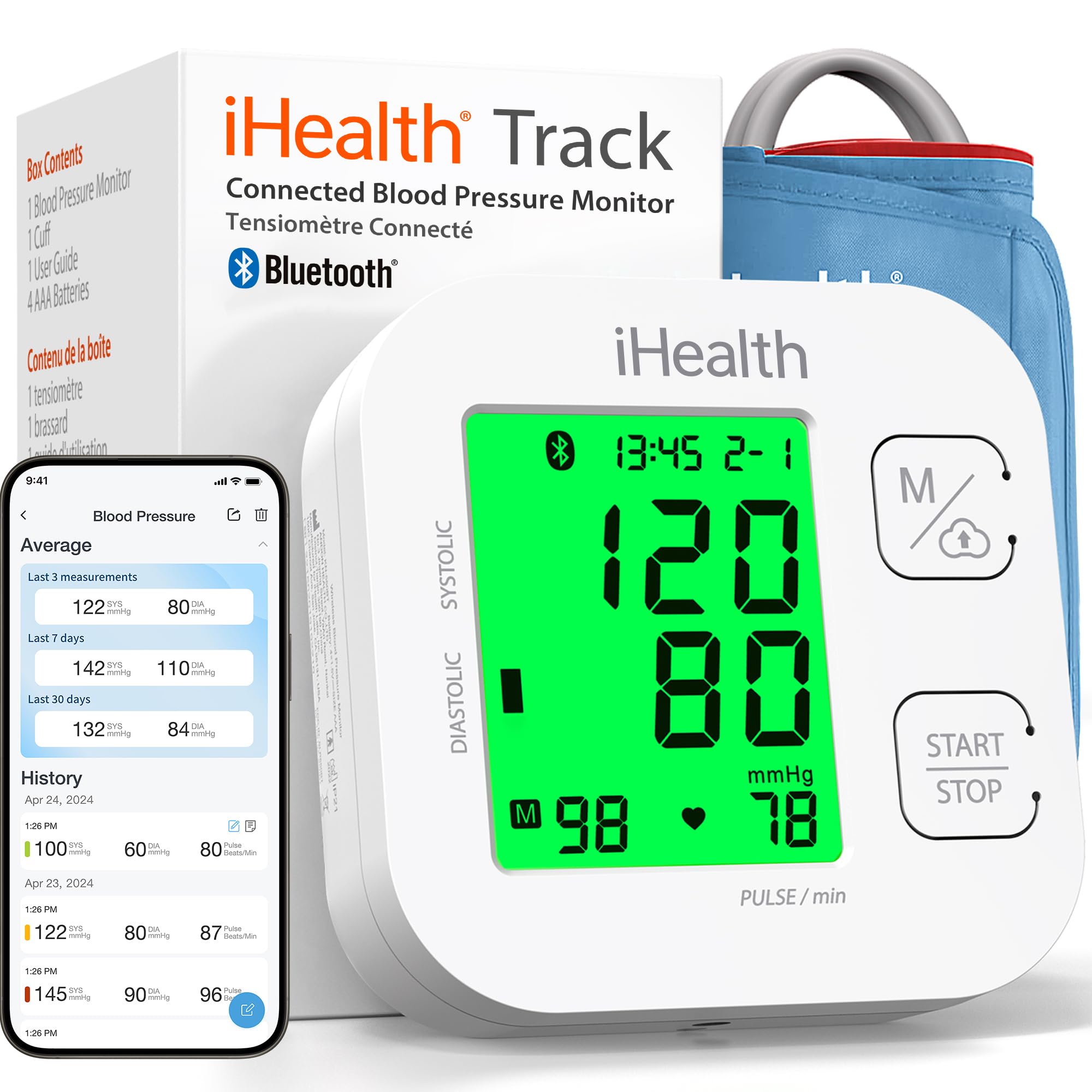
If you want a simple, accurate blood pressure monitor that syncs to your phone, this one’s a solid pick.
Pros
- Easy to use right away with a clear color display.
- Bluetooth syncs readings to the app and Apple Health.
- Wide cuff fits most adult arms and feels comfortable.
Cons
- Bluetooth can be a little flaky and sometimes needs patience to reconnect.
- Some app features might require a subscription.
- Uses AAA batteries instead of a rechargeable battery.
I used this monitor for a few weeks. It gave me quick readings, and the big numbers plus green/yellow/red guide made it easy to know if things looked normal.
The cuff slipped on easily and inflated smoothly. I compared results with a clinic device, and the numbers were close enough for home use.
Syncing to the iHealth app worked most of the time and sent data to Apple Health, which helped at doctor visits.
Sometimes the monitor wouldn’t pair right away, so I’d restart Bluetooth on my phone and it’d connect.
If you want a straightforward, app-connected monitor and don’t mind swapping batteries now and then, this one gets the job done.
Etekcity Smart Scale

For an easy-to-use smart scale that syncs with fitness apps and gives consistent readings, this is a good choice.
Pros
- Simple app setup and reliable phone sync.
- Clear LED display and sturdy tempered-glass platform.
- Tracks multiple metrics and works for lots of users.
Cons
- Some advanced metrics jump around in accuracy.
- Occasional sync hiccups with voice assistants.
- App features can change over time.
I set this scale on my bathroom floor and used it for a few weeks. The numbers are big and easy to read, and standing on it feels solid.
It pairs with my phone quickly and sends weight and body metrics to the app without much hassle.
I tried the baby/pet mode and the light-items mode; both worked when I needed them.
The precision works well for daily tracking, though some body-composition numbers swing a bit. I treat those as trends, not gospel.
The VeSync app gives you goals and graphs, which helped me stay motivated. Syncing to Apple Health and Google Fit worked for me, but Alexa integration was spotty even though the app says it’s supported.
Overall, the scale fits into a normal routine and makes tracking easy.
Roku Streaming Stick HD

If you want a no-fuss way to add streaming to a TV, this stick is a straightforward option.
Pros
- Quick setup and a small design that hides behind the TV.
- Simple voice remote that also controls power and volume.
- Lots of free channels and all the big apps in one place.
Cons
- Only 1080p, so not for 4K TVs or those wanting the best resolution.
- Menus can lag if you flip between lots of apps quickly.
- Needs a strong Wi-Fi signal for smooth streaming.
I plugged this stick into an old bedroom TV and setup took just a few steps. The home screen loaded fast, and I liked powering it from the TV so there weren’t extra cords everywhere.
The voice remote felt natural—I asked for shows, adjusted volume, and used headphone mode for quiet watching.
Navigation was easy, and the free live channels were handy for catching news or weather.
When I tried to multitask or swap apps quickly, I noticed some lag. The picture looked fine for HD shows, but it’s not a 4K device.
For a second TV, travel, or just a simple upgrade, it’s hard to beat for the price and convenience.
Buy the Roku Streaming Stick HD on Amazon
Yintar 6ft Power Strip

If you want a basic power strip with lots of outlets, USB charging, and solid surge protection for a good price, this one’s worth a look.
Pros
- Tons of outlets plus 3 USB ports for charging.
- Strong surge protection with a visible protection light.
- Long, flat 6 ft cord fits behind furniture easily.
Cons
- Feels a bit plasticky compared to heavy-duty strips.
- USB output is okay but not super fast for big tablets.
- Not rated for outdoor use, even though some people use it outside.
I used this behind my couch to power a heating blanket, smart speaker, and a laptop. It handled everything without tripping, and the wide-spaced outlet fit a chunky adapter without blocking others.
Mounting holes and a flat plug made it easy to tuck under my desk. The cord reached the outlet without moving furniture, and cable ties kept things neat.
Surge protection gave me some peace of mind for my TV and router. The unit feels lightweight, but the surge circuitry seems well designed, and the indicator light is reassuring during power spikes.
HANYCONY 8-Outlet Power Strip

If you want a compact surge strip that handles a bunch of devices without blocking sockets, this one’s handy.
Pros
- Lots of ports (8 outlets + 4 USB) so you probably won’t need another strip.
- Wide spacing fits big adapters without crowding.
- Flat braided cord and wall-mount holes make setup easy.
Cons
- Not Wi‑Fi or smart home enabled.
- USB output is okay but not super fast for tablets.
- The product name is long and kind of awkward.
I used this on my desk and liked that everything fit without plugs bumping into each other. The three-sided design kept chargers accessible, and the USB‑C ports charged my phone quickly enough.
Mounting was straightforward—the flat plug and braided cord tucked right behind a shelf. The switch and breaker light helped when I ran a hair tool and chargers at the same time.
If you’re after a no‑frills, heavy‑use power strip that stays organized, this one worked well for my home office.
Buying Guide
When I pick out smart home devices, I try to focus on what really matters. You want the right fit for your home and your needs, not just a flashy gadget.
First thing I check? Compatibility. The device needs to work with your hub, phone, and whatever other tech you’ve already got set up.
Look for common standards like Wi‑Fi or Bluetooth. Open protocols are usually a safer bet if you want things to play nicely together.
Features matter, but only if they help in daily life. Battery life, range, and response time all play into how reliable the device feels day-to-day.
I pay attention to security features and regular firmware updates. Those updates help protect your data, and it’s not something to overlook.
Setup shouldn’t be a headache. A simple app and clear steps can save you a lot of time (and maybe a little frustration).
Voice and automation support make life easier. Hands-free control? I’m all for it, especially when I’m in a rush.
Durability is a big deal, especially for anything that’s going outside. Weather resistance, good materials, and a decent warranty tell you a lot about how long the device might last.
Cost is always part of the equation. Think about whether the device will save you money in the long run, like with energy monitoring or smart schedules.
Honestly, a low price tag can mean more repairs or replacements later. Sometimes it’s worth paying a little more up front.
| Feature to Check | Why it matters |
|---|---|
| Compatibility | Prevents wasted purchases |
| Connectivity | Affects range and speed |
| Security | Protects privacy and data |
| Power | Battery life or wiring needs |
| App & UX | Daily control and setup ease |
| Durability | Longevity and reliability |
| Cost vs Value | Budget and long-term savings |
I always check reviews, but I try to focus on the problems people mention most. That’s usually where you’ll spot recurring faults or dealbreakers.
In the end, I go for the device that strikes a good balance between features, security, and long-term value. It’s not always a perfect science, but it works for me.
Best Smart Trash Cans for Every Home in 2026 - Ruijiayu
11 6 月, 2026 @ 7:54 下午
[…] trash cans make taking out the trash easier and cleaner. They use motion sensors, voice commands, or app controls to open and […]
Best Smart Thermometers for Accurate Home Monitoring in 2026 - Ruijiayu
11 6 月, 2026 @ 7:54 下午
[…] Wi‑Fi hub lets me check temps even when I’m far from the grill. […]
Best Smart Sleep Masks for Better Rest and Travel Comfort - Ruijiayu
12 6 月, 2026 @ 6:42 下午
[…] sleep masks blend a simple idea with smart tech to help you fall asleep faster and wake up less groggy. They block light like regular masks but add […]
Best Pill Organizers for Daily Medication Management and Travel - Ruijiayu
14 6 月, 2026 @ 8:28 上午
[…] the best pill organizers to help you manage daily meds and supplements. We picked products that are easy to use, reliable, and safe, so you can find something that works at home or on the […]
Touchless Trash Cans for Kitchens with Pets (Dogs Can't Open Them): Top Reliable Models and Buying Guide - Ruijiayu
25 6 月, 2026 @ 1:05 下午
[…] trash cans use sensors or pedal-free mechanics to open lids without hand contact. That keeps kitchens cleaner and helps cut down on […]
PhoneSoap 3 Review: Is This the Best UV Phone Sanitizer? - Ruijiayu
15 7 月, 2026 @ 3:42 下午
[…] fit right into my routine, so I didn’t forget to disinfect after being out. It held my phone and small items like keys or earbuds […]