Best Smart Thermometers for Accurate Home Monitoring in 2026
Smart thermometers help you keep tabs on temperature and get alerts even if you’re not near the device. They connect to phones or hubs, track trends, and can help save energy or spot heating issues early.
I’ll break down how these tools work and why they’re worth considering for homes and HVAC systems.
Smart thermometers come in different styles—simple room sensors, multi-zone setups, and outdoor probes. Some are all about energy savings and learning your daily patterns, while others deliver detailed data for troubleshooting.
Reliable temperature accuracy and strong app or hub compatibility matter most. Poor readings or crummy connectivity can make a smart thermometer a waste of money.
I tested and compared models for setup, accuracy, connectivity, and handy features. My goal: help you find one that fits your needs and works with your system.
Best Smart Thermometers
Here’s my list of the best smart thermometers for home use. I tested models that track temp accurately, sync with apps, and work with voice assistants—so you can pick what fits your style.
CHEF iQ Sense

If you want a tough, accurate smart probe that lets you monitor long cooks from anywhere, this is a solid pick.
Pros
- Super accurate readings from multiple sensors.
- Wi‑Fi hub lets me check temps even when I’m far from the grill.
- Probe is thin and keeps juices in the meat.
Cons
- Hub placement can be tricky for a steady connection.
- App and charging cable feel a bit clunky.
- Some buyers mention probe failures after heavy use.
I used the CHEF iQ Sense for backyard and oven cooks. The probe slid into brisket and steaks without fuss.
Watching internal temps update in real time and getting flip or rest alerts felt reassuring. The Wi‑Fi hub let me wander the yard and still keep tabs on my cook from my phone.
I did have to move the hub closer when the signal dropped, especially with fences or walls in the way. Cleaning the probe after a long cook was painless since it’s dishwasher safe.
The app has useful presets and guided recipes. Still, the cable and app flow just didn’t feel as polished as the hardware itself.
Govee H5075 Hygrometer

Looking for an easy, accurate Bluetooth thermometer-hygrometer for rooms or small projects? This one’s worth a shot.
Pros
- Quick readings and fast refresh rates—I saw changes almost instantly.
- Clear, bright display that’s easy to read from across a room.
- App alerts and data export help me track history and get notifications.
Cons
- Bluetooth range is short, so remote monitoring only works nearby.
- Small unit can tip over or get lost on a shelf.
- You need the app for full features like export and alerts.
I put this on my bedroom shelf and liked how fast it updated when I opened the window. The screen shows big numbers—I didn’t even need my glasses to check it at night.
Pairing with the Govee app took just a few taps. I started getting push alerts when humidity went outside the range I set.
Exporting a CSV for two weeks of data was handy when I tracked a damp spot in the basement. Battery life held up well and readings matched my other meters.
If you want long-range remote access, look elsewhere. For nearby rooms, plant areas, or a wine closet, though, this worked well for me.
ThermoMaven G1
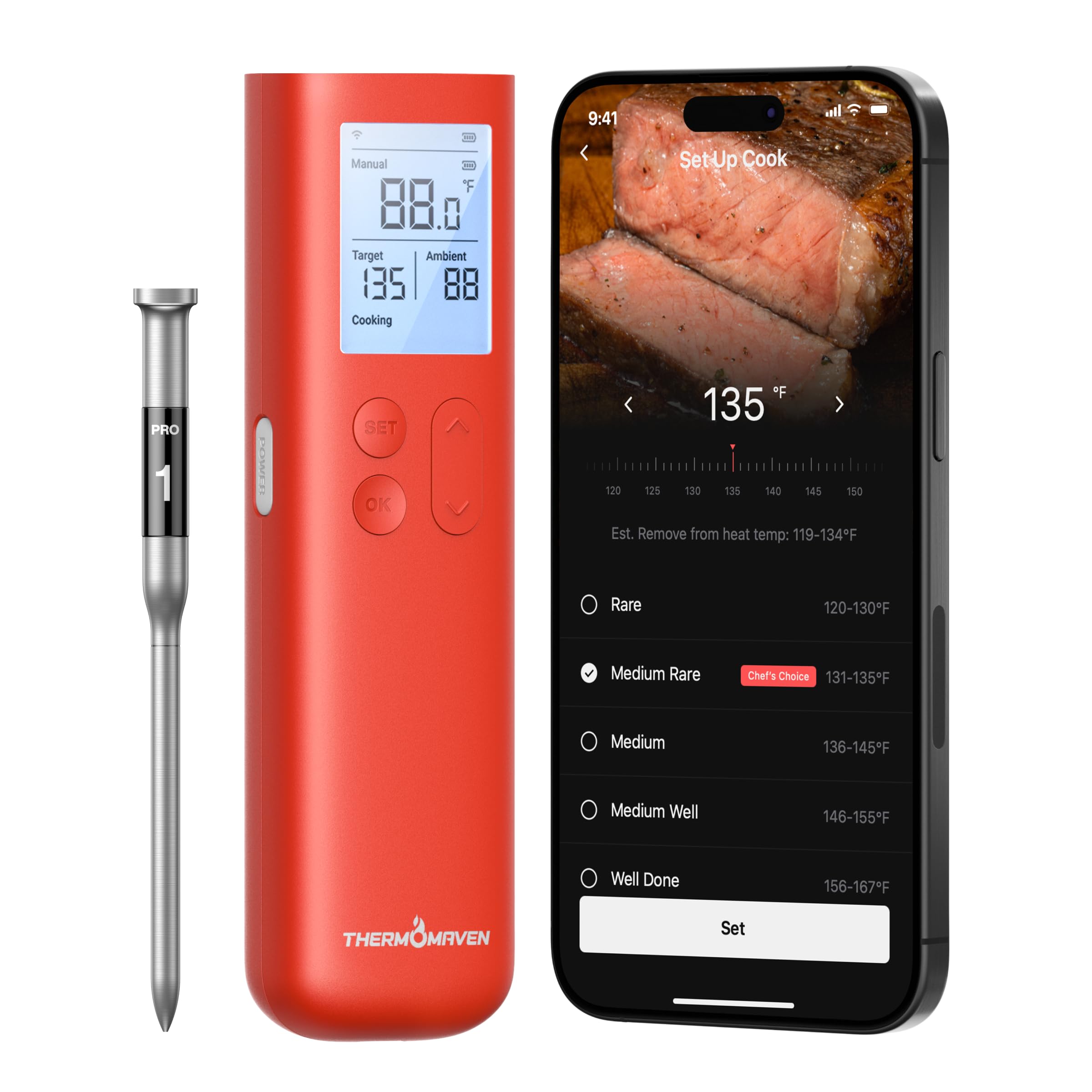
If you want a rugged, accurate wireless probe with a bright stand-alone display and long battery life, this is a good bet.
Pros
- Steady long-range signal for checking cooks from far away.
- Clear, fast readings on the base—no phone needed.
- Feels solid and the probes clean up easily after a messy smoke.
Cons
- The app sometimes needs a manual refresh to show the latest temp.
- Probe wires can limit placement for small cuts.
- Base is splash-resistant but not totally dishwasher-safe.
I used the ThermoMaven for a 10-hour brisket smoke and the base stayed paired the entire time. The probe gave steady numbers and the quick-charge battery lasted the whole cook with plenty to spare.
Seeing temps on the big display when I walked back to the porch was handy. Setting it up was simple—plug in the probe, pair, and go.
The Sub-1G link kept me connected as I moved around the yard. The app added convenience, though I had to tap refresh once when the phone lagged.
Cleaning was easy since the probe handles high heat and rinsing. For small steaks or kabobs the probe setup feels bulky, but for roasts, whole birds, and big cuts it worked great.
Customer support answered my question quickly, so I felt confident using it for bigger cooks.
Govee H5075 3-Pack

If you want a reliable, easy-to-read hygrometer trio for rooms or hobbies, this set is a safe bet.
Pros
- Simple setup and steady Bluetooth connection.
- Bright, large screen that’s readable from across a room.
- Fast updates and handy app alerts for out-of-range readings.
Cons
- App-only history and alerts can feel limited if you don’t always have your phone.
- Plastic feel and small size mean it’s easy to misplace.
- Battery changes aren’t frequent but you’ll need to do them eventually.
I put one on my bedside table and another in the basement to watch humidity swings. The screen gave me a clear number at a glance, and the comfort icons helped me judge if the air felt dry or damp without opening the app.
Pairing through the Govee Home app took under a minute. The device refreshed quickly; I could see humidity drop right after I ran a dehumidifier.
The Bluetooth range held up as I moved around the house. The app stores recent data and lets you export older records, which I used to track changes over weeks.
I wished the unit felt a bit more solid, but it worked just as I needed for rooms, a wine spot, and a small greenhouse.
Chef iQ Sense
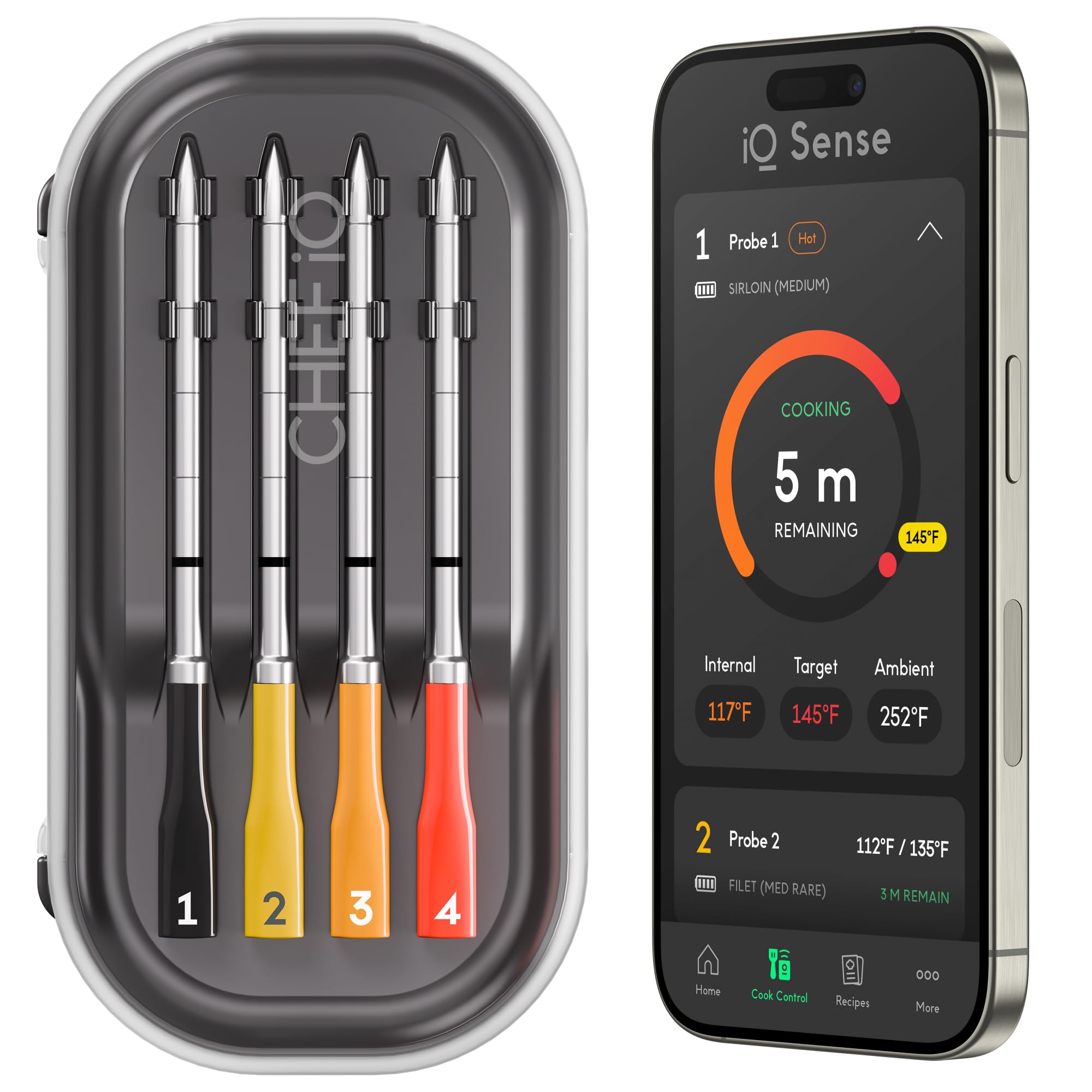
If you want hands-off, accurate temps for grilling or smoking, this one stays connected and handles multiple probes well.
Pros
- Super easy to monitor remotely with WiFi and app notifications.
- Four thin probes let me cook different cuts to different donenesses.
- Durable probe design that survived high-heat grilling sessions.
Cons
- App can be fussy at first and took some patience to pair all probes.
- One probe stopped responding after heavy dishwasher use.
- Hub needs a good spot near the grill for a steady connection.
I used the Chef iQ Sense during a weekend smoke and liked how the app kept me posted without standing over the cooker. The flip reminders and rest timers took the guesswork out of managing brisket and chicken at once.
Setup required some fiddling. I had to move the hub closer to the grill to keep the Bluetooth link steady, but once it was in the right spot, the probes reported stable temps.
The estimated cook-time feature helped plan when to pull and rest meat. Cleaning was convenient since the probes are dishwasher-safe, though one of mine stopped registering after several washes.
Customer support replaced parts for a friend, so there’s some recourse if a probe fails. For long cooks and multi-protein meals, it’s a strong choice when you want reliable remote monitoring and multiple probes at once.
Buying Guide
I always start with accuracy. A thermometer should give consistent readings within a small margin of error.
Check listed accuracy. Look for independent testing or clinical validation whenever you can.
Next, I think about ease of use. Go for a model with a simple display and controls you don’t have to squint at or fumble with.
If it connects to an app, make sure the app’s not a headache. I want to see my history at a glance, not dig through menus.
Measurement type and speed matter too. Oral, ear, forehead, and patch styles each come with their own quirks and perks.
Faster readings are nice, but I’m always a bit skeptical—don’t let speed trade away accuracy.
I also check connectivity and features. Bluetooth or Wi-Fi helps me track temps over time and send results to caregivers if needed.
Multi-user profiles are useful. I appreciate alerts and data export options too.
Power and durability are on my list. Long battery life just makes things easier.
If kids or clinics are involved, water resistance and a sturdy build become more important.
Price versus value is always in the back of my mind. Sometimes a higher cost means better sensors or extra features, but not every time.
I dig into specifications and user feedback to figure out what’s actually worth it.
Here’s my quick checklist when I’m choosing:
- Accuracy claims and validation
- Measurement method and speed
- App quality and data features
- Battery life and durability
- Ease of cleaning and hygiene
- Price relative to features
If I can, I test in real conditions. I’ll try several readings and compare them to a thermometer I already trust.