Smart Ovens: The Ultimate Guide to Features, Benefits, and Buying Tips
Smart ovens bring smart features to a basic kitchen tool. They heat, roast, bake, and often steam or air-fry—but with connected controls and preset cooking programs.
These ovens can save time, keep temperatures steady, and help less-experienced cooks get more consistent results. I see them as a step between a regular oven and a fully connected kitchen appliance.
When choosing a smart oven, check the size and capacity for your cooking needs. Make sure the presets and temperature control are reliable.
Also, see how the app or controls fit your routine. A smart oven that actually makes cooking easier is the one that’s worth it.
Best Smart Ovens
I picked these smart ovens for their reliable cooking, easy controls, and useful smart features. These models heat evenly, connect well to apps, and just make life in the kitchen a bit simpler.
Breville Smart Oven Air Fryer Pro

I recommend this if you want one countertop appliance that bakes, roasts, air fries, and dehydrates well.
Pros
- Cooks evenly and fast thanks to strong convection and smart heating.
- Handles large dishes — I fit a 9×13 pan or a small turkey easily.
- Lots of preset functions make everyday cooking simple.
Cons
- It’s heavy and takes up real counter space.
- Learning all the functions takes a few tries.
- Exterior and door get hot; you need clear counter space.
I used the Breville for a week of meals and found it replaced my toaster oven and sometimes the main oven. The Element iQ felt real—things browned evenly, and air-fried foods crisped up without extra oil.
I roasted vegetables and tried the dehydrate setting on fruit. The large interior let me run multiple trays at once.
Controls are clear, but I still timed a few recipes myself because presets can be a little conservative. Cleanup was straightforward, but the rack positions and heavy accessories mean more to handle.
If you have the space, it’s a pro-level countertop oven that does a lot of jobs well.
Breville Smart Oven Pro
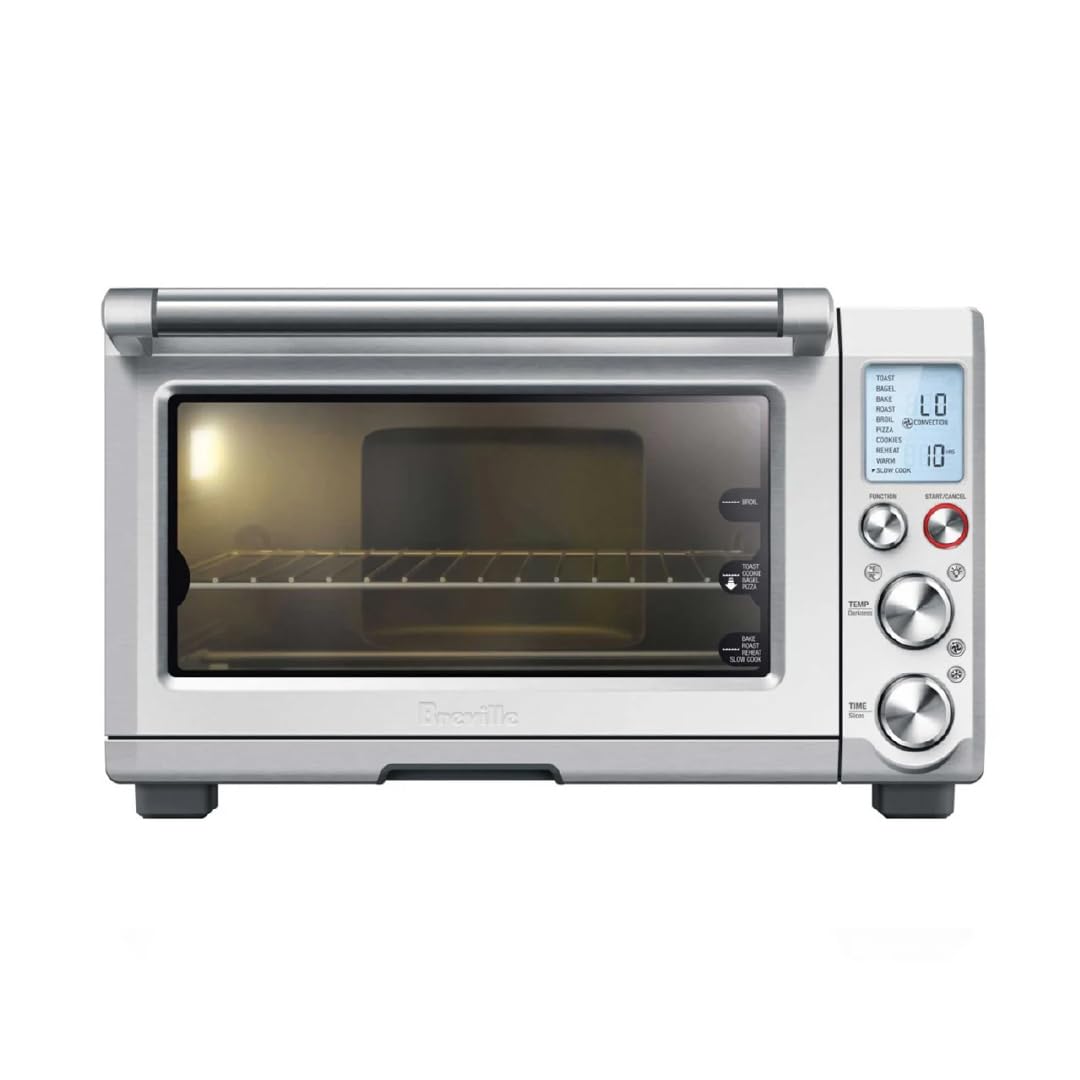
I recommend this if you want a fast, reliable countertop oven that cooks evenly and handles pizzas, cookies, and roasts well.
Pros
- Heats up quickly and browns evenly.
- Convection shortens cook time and crisps food nicely.
- Simple controls and useful preset functions.
Cons
- Bulky for small kitchens.
- Runs warm on the outside; needs space.
- Pricier than basic toaster ovens.
I used this oven for weeks and liked how it vaulted from cold to ready fast. The Element iQ felt real—top and bottom heat shifted where food needed it, and my pizzas came out with a crisp crust and a soft center.
I made cookies and toast that were even across the tray. The convection fan shaved time off roasts without drying meat.
Controls and the LCD are easy to read and use. Cleaning mostly meant wiping the enamel pan and crumb tray.
If counter space is tight, measure first; this is not a compact model.
Ninja Foodi Smart XL Air Oven

I recommend this if you want a fast, roomy countertop oven that air fries and uses a probe to get doneness right.
Pros
- Cooks fast and crisps well on two racks.
- Smart probe helps avoid overcooking.
- Replaces several appliances in one unit.
Cons
- Takes up significant counter space.
- Learning all the functions takes time.
- Toast and bagels can be uneven sometimes.
I used this oven for a week of dinners and kid lunches. It heats up in less than two minutes, so I tossed a sheet pan and a roast in without waiting.
The True Surround Convection made fries and roasted veggies crispier than my old toaster oven. I relied on the Smart Cook thermometer for a medium roast and it hit the temp exactly.
The display and rack suggestions helped me place pans quickly. Cleaning was easier than a full oven, but the crumb tray and accessories need scrubbing after greasy runs.
Baking and air frying back-to-back worked well. Toasting was just okay for bagels; slices browned differently on the same setting.
If you need a powerful, multiuse countertop oven and have room for it, this Ninja handles family meals well and cuts down on oven time.
Typhur Sync Oven (Sync Oven)
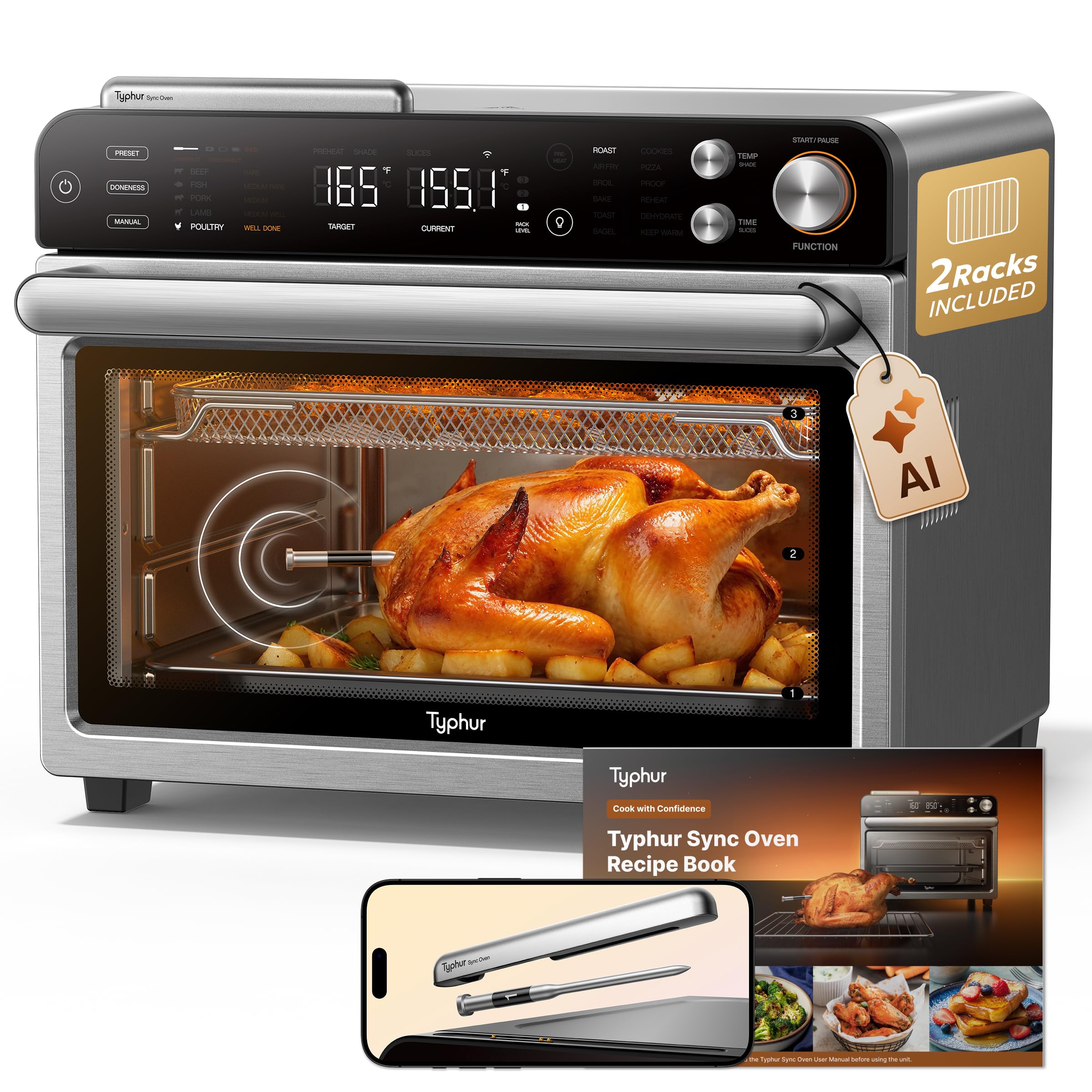
I would buy this if you want precise, app-controlled cooking with a built-in wireless probe that actually works.
Pros
- Probe stops cooking at the right doneness every time.
- Large capacity cooks a whole meal without crowding.
- Crispy air-fry results with less oil.
Cons
- It takes up a lot of counter space.
- First tries can overcook without learning the presets.
- App control adds steps if you prefer simple knobs.
I used the Sync Oven for weeks and trusted the wireless probe for meats. The probe tracked core temps accurately, and the oven shut off when it hit my target.
That removed the guesswork on roasts and chicken. Air frying wings and veggies gave a crisp exterior and moist inside.
The 360° fan moved heat fast, so things cooked quicker than my old toaster oven. I liked that the oven handled many tasks—air fry, bake, dehydrate—without swapping appliances.
The app adds useful timers and recipes, though I sometimes missed quick manual controls. Size matters here: it’s roomy but big on my counter.
Bravo Pro 21QT Smart Oven

I recommend this if you want a compact all-in-one oven that crisps food fast and cooks evenly.
Pros
- Heats up quickly and gives a crisp finish.
- Controls let me tweak top/bottom heat and fan speed.
- Fits well in a small kitchen but still holds a decent amount.
Cons
- Learning curve to get the heater and fan settings right.
- Door and controls feel tight at first; takes a few uses to get smooth.
- Can smell slightly on first runs if not pre-baked or cleaned.
I used the Bravo Pro for a week and liked how fast it came to temperature. Toast and fries browned evenly on multiple racks, and the fan made a visible difference when I wanted crisp crusts.
I tested pizza settings by shifting more power to the bottom element. The crust turned crunchy while the top stayed melted but not overdone—that control really helped for thick pizzas.
Cleaning was simple. The crumb tray and baking pan slide out easily, and the stainless steel wiped down with a damp cloth.
Controls are touch-based, so I recommend reading the quick guide once and then playing with presets. If you want precise control and fast results in a compact unit, it handled my everyday meals without fuss.
Buying Guide
I always start with the basics: oven size and capacity. Think about how many people you usually cook for and how much space you’ve actually got in your kitchen.
Next, I dig into cooking modes and smart functions. Things like convection, air fry, steam, and preset programs really open up your options.
I’m a fan of simple, reliable smart controls. Remote control, app timers, and voice options are only worth it if they genuinely save you time.
Temperature accuracy matters a lot. Good sensors help keep food consistent.
Look for clear info on how the oven measures and adjusts heat. If a brand’s vague about it, I get skeptical.
Build quality and cleaning are huge for me. Stainless interiors and removable racks make life easier.
If I can find details about door design or how the handle feels, I’ll pay attention to those too. Nobody wants a flimsy handle, right?
Connectivity and software support are worth checking. Wi‑Fi and app features sound cool, but only if the company actually keeps them updated.
See if the oven’s app gets regular updates. A clunky or outdated interface can get old fast.
Energy use and safety features are next on my list. I look for energy ratings, auto shutoff, child locks, and cool‑touch doors.
These features not only cut down risk but can also save you money in the long run.
Price always matters, but I think about long‑term value too. Warranty length and what it covers can tip the scales.
Sometimes paying a bit more makes sense if you know service and parts are easy to get locally.
I keep a short checklist: capacity, cooking modes, temperature accuracy, cleaning, connectivity, safety, warranty. Narrow it down with that, and you’ll feel a lot more confident picking the right oven.
VOPLLS 4K Smart Mini Slide Projector Review: Thinnest 1080P Outdoor Projector — Is It Worth Buying? - Ruijiayu
6 7 月, 2026 @ 5:46 下午
[…] liked the built-in apps and WiFi, which let me stream without extra gadgets, and Bluetooth audio paired up with my speaker […]