Best Smart Label Printers for Home and Business Use: Top Picks and Buying Guide
Smart label printers help you create neat, durable labels for home, office, and small business use. They feed pre-sized label tape or rolls into a compact machine and print text, barcodes, and simple graphics from your computer or smartphone.
I focus on models that balance speed, print quality, and ease of use. If you want to organize files, ship packages, or tag items without hassle, these are worth a look.
Label size, connectivity, and consumable cost matter most when picking a smart label printer. Some only print narrow address labels, while others handle wide shipping labels or continuous rolls.
Wireless setup, mobile app features, and how often you’ll buy replacement tapes affect both convenience and long-term cost. I tested several popular smart label printers to find the ones that deliver clear prints, reliable connectivity, and reasonable ongoing costs.
Best Smart Label Printers
I tested top smart label printers for home and small business use. Here’s my list of the best options based on print quality, speed, connectivity, and app features.
Seiko SLP620 Smart Label Printer

I recommend this if you want a simple, fast desktop label printer that just works for basic home or small office tasks.
Pros
- Easy front-load roll change — swapping labels is quick.
- Reliable thermal printing — crisp text and scannable barcodes.
- Simple USB setup for PC or Mac.
Cons
- Basic software feels dated compared to modern apps.
- No wireless option — you need a cable to your computer.
- Small label width limits large-format needs.
I used this Seiko on my desk for a few weeks and liked how fast it warmed up and printed. The front-load design really saves time when I change rolls.
The labels fed smoothly without fiddling. The software let me pull addresses from a spreadsheet and print batches without messing with templates.
I missed a smartphone app and Wi‑Fi, though — I had to move my laptop closer to the printer to run batches. Print quality stayed sharp for shipping and file labels, and barcodes scanned fine on my scanner.
If you need basic, reliable label printing and don’t require wireless or oversized labels, this handled daily tasks well.
Seiko SLP-620 Smart Label Printer
I recommend this if you want a small, reliable desktop label printer for basic office or home use.
Pros
- Small footprint saves desk space.
- Simple USB setup for PC/Mac.
- No ink or ribbons to buy.
Cons
- Seiko’s label software feels clunky.
- Limited to monochrome labels.
- Label feeding can need a few tries on some rolls.
I used the SLP-620 for a week to make shipping and file labels. Setup was straightforward — plug in the USB, install the drivers, and print.
The unit stayed quiet and compact on my desk. Printing felt consistent and the thermal labels came out clearly.
I liked not having to deal with ink or ribbons. The speed is modest but steady, which fits light to medium labeling tasks.
The software needs work. I struggled with the app’s layout and a couple of times labels advanced awkwardly after a print.
Support helped me sort a driver issue, but the program itself still felt dated. For a small office or home user who wants a no-frills, space-saving label printer, this delivered where it matters: reliability and low running cost.
If you need color labels or slick design software, look elsewhere.
Seiko SLP620
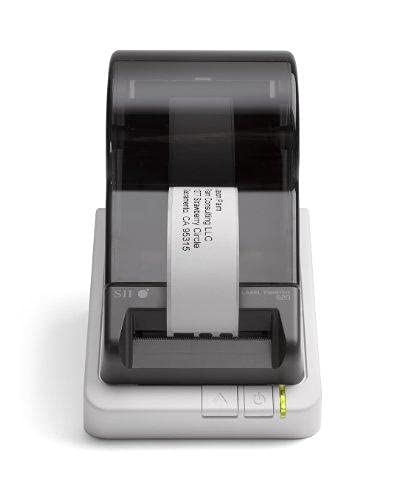
I recommend this if you need a simple, reliable label printer for small office or retail use because it prints clean labels fast and hooks up easily via USB.
Pros
- Prints clear text at 203 dpi
- Fast enough for small batches (up to 70 mm/sec)
- Simple USB hookup and included power/USB cables
Cons
- Limited to 2.25″ label width
- Setup CD may be old for new PCs
- No wireless or advanced app features
I pulled this out of the box and plugged it into my laptop. Drivers installed without much fuss once I used the disc drivers.
The physical build felt sturdy and compact on my desk. Labels came out sharp and consistent.
I ran address and barcode labels and was pleased with the print clarity and speed for short runs. The feed and cutter worked cleanly, which saved me time during packing.
I noticed limits quickly: it only handles up to 2.25″ wide labels and has no Wi‑Fi. For a modern office that wants mobile printing or wider label options, that matters.
Still, for USB-only setups this felt dependable and solid. If you want to view or buy this model, check it here: Seiko SLP620 on Amazon.
Ponek M100 Label Maker
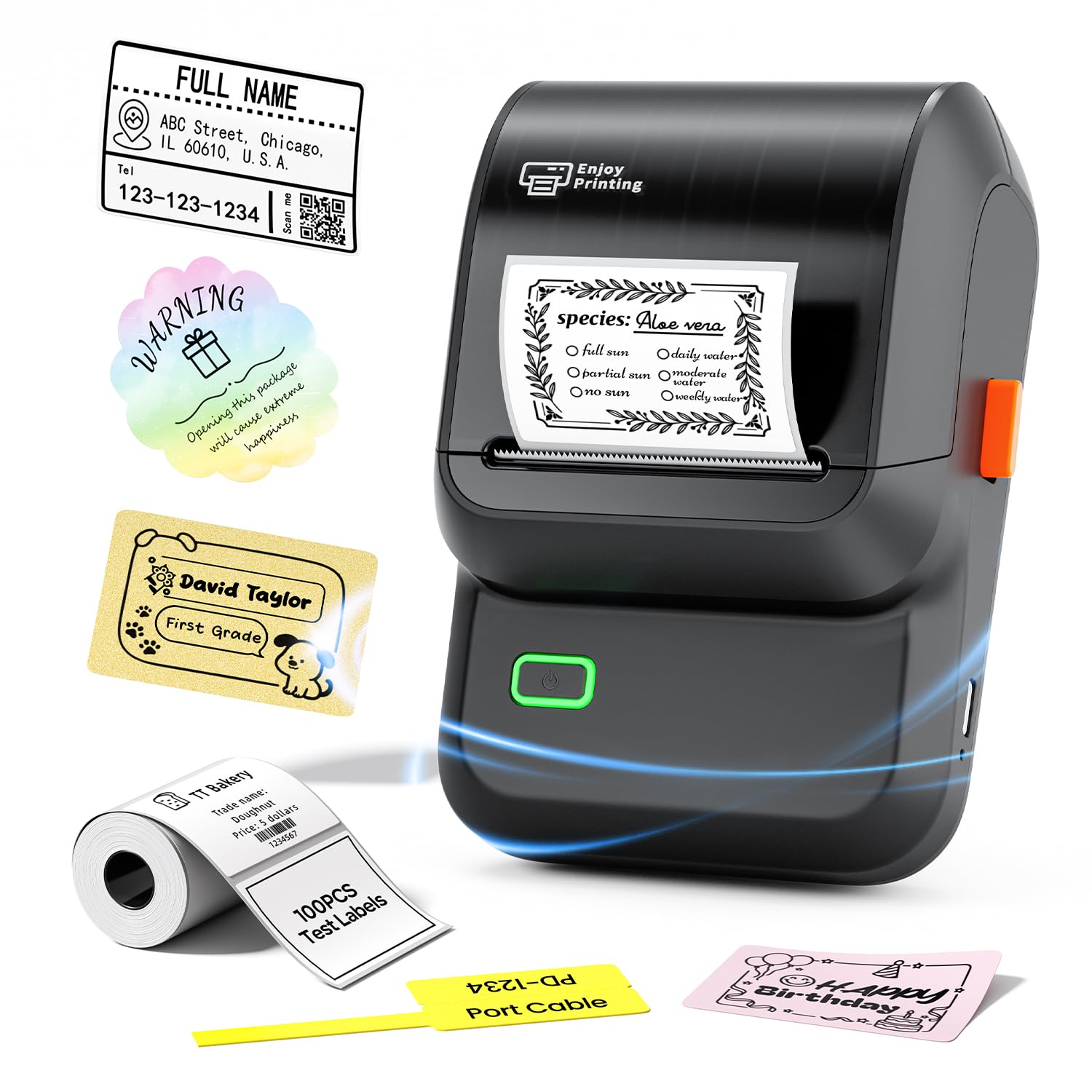
I recommend this if you want a light, easy-to-use Bluetooth label printer for home, office, or small business organizing.
Pros
- Easy Bluetooth setup and fast printing.
- Lots of templates, icons, and fonts in the app.
- Lightweight and truly portable for travel.
Cons
- App has some paid features and a short learning curve.
- Labels struggle to stick to fabric and felt.
- Occasional Bluetooth hiccups on first connect.
I used the M100 for a week to label pantry jars, file folders, and safety tags. The first labels looked crisp and clear, and I liked not needing ink.
Printing felt quick and the machine stayed cool. Creating designs in the app felt powerful because it has many icons and fonts.
I did need a few tries to find some features that aren’t free, but once I learned the app it saved time. Battery life held up for many small jobs and the device fit easily in my bag.
If you want a rugged, fabric-friendly adhesive or a fully free app, look elsewhere; otherwise this hits most everyday needs well.
Nelko P21

I recommend this if you want a lightweight, phone-controlled label printer for quick home or classroom tasks.
Pros
- Very compact and easy to carry.
- Prints clear text and QR codes without ink.
- App offers many templates and icons.
Cons
- Only prints black; no true color output.
- App setup can be fiddly on some phones.
- Not compatible with Android 14 on some devices.
I used the Nelko P21 for a week to label pantry items, school supplies, and a few storage bins. It felt light in my hand and fit into a small drawer when not in use.
Loading the roll was straightforward once I read the small guide card. Connecting via Bluetooth took a minute, and the Nelko app gave me lots of template options.
I liked being able to add QR codes and small icons quickly. The print quality looked sharp on the white paper and held up on plastic containers.
Battery life lasted several sessions before I recharged with the included USB-C cable. I noticed the app can be slow on older phones, and one of my devices needed the latest app update to pair correctly.
For larger projects, the fixed label lengths felt limiting, but for everyday tagging the P21 worked well.
Buying Guide
I start by looking at the main uses. Do I need labels for shipping, inventory, barcodes, or just home organization? That choice really narrows down the features I care about.
Connectivity comes next. Wi‑Fi, Bluetooth, and USB—these make a difference depending on whether I print from my phone or computer.
I always lean toward devices that support the connections I use now, but I try to think about what I might want in the future too.
Label size and print resolution matter. Higher DPI makes tiny text and barcodes readable, which is honestly a must for me.
I double-check that the printer can handle the label widths and materials I actually plan to use. No point buying something that won’t fit my needs.
Speed and duty cycle affect my workflow. If I’m printing a ton, I go for something faster with a higher monthly duty cycle.
For lighter tasks, I don’t mind slower models, especially if they cost less. Why pay more for speed I’ll never use?
Software and app support can make or break the experience. I want to design labels on my phone or PC without a headache.
Simple apps and compatibility with common file types are a big plus. I’m not interested in wrestling with clunky programs.
Consumable costs sneak up on you. Label roll prices, special adhesives, and maintenance parts all add up.
I try to estimate my monthly usage so I’m not surprised by long-term expenses. It’s easy to overlook until the bills start piling up.
Build quality and size actually matter more than I expected. A compact, sturdy unit fits small desks and doesn’t feel flimsy.
If I move labels around, I want something portable and well made. Cheap plastics just don’t cut it.
For business use, I check security and management features. User access controls and network settings reduce risk.
Remote management is a bonus if I need to handle things from afar. It just makes life easier.
I always read specs and real user feedback. Balancing feature needs, budget, and ongoing costs helps me pick what actually fits my setup.
Best Smart Desk Lamps for Productivity and Eye Comfort in 2026 - Ruijiayu
17 6 月, 2026 @ 5:21 下午
[…] level, which bugged me for a matched pair. Customer support offered replacement, and the lamps use UL-listed parts, so I felt okay about […]
Touchless Trash Cans for Kitchens with Pets (Dogs Can't Open Them): Top Reliable Models and Buying Guide - Ruijiayu
25 6 月, 2026 @ 1:06 下午
[…] options come into play, too. Rechargeable batteries can cut long-term costs, but sometimes I prefer replaceable cells for quick […]
EVISTR 64GB Digital Voice Recorder Review: Worth Buying? - Ruijiayu
6 7 月, 2026 @ 5:40 下午
[…] automatic names are useful but not descriptive. I had to rename important files on my computer to remember what each recording […]