Breville Barista Touch Impress: Complete Guide to Setup, Features, and Best Practices
Espresso machines let you make cafe-style drinks at home. You get to control things like grind size, dose, temperature, and milk texture.
Super-automatic and semi-automatic models try to make all that easier by automating grinding, dosing, tamping, and steaming. The Breville Barista Touch Impress sits somewhere between compact prosumer machines and full manual setups. It has a built-in grinder, touch controls, and an automatic milk-frothing system, so you can make consistent espressos and milk drinks with less hassle than a manual lever or steam wand.
When picking a machine like the Barista Touch Impress, look at grind quality, consistency, temperature and pressure stability, cleaning ease, and milk-texturing. Those really shape shot quality and daily use.
Size and build matter if you’re short on counter space. Serviceability is worth checking for long-term use. I tested the Barista Touch Impress to see if it grinds well, pulls good shots, textures milk automatically, and handles daily use—so you can figure out if it fits your routine.
Best Breville Barista Touch Impress Models
I picked a range of Breville Barista Touch Impress machines for different budgets and skill levels. Here are models that offer reliable espresso, easy milk texturing, and consistent results for home use.
Barista Touch Impress

I’d buy this if you want fast, guided espresso and silky milk foam. Just know it might need tinkering and care over time.
Pros
- Fast heat-up and clear on-screen guidance make learning quick.
- Hands-free tamping and consistent microfoam for easy lattes.
- Built-in grinder makes single-touch brewing convenient.
Cons
- Grinder and electronics might show faults after months of use.
- Needs occasional tweaking to hit the exact grind and dose.
- Large footprint and weight take up counter space.
I used the Impress for several weeks and liked how quickly it warmed up. The touchscreen walks you through grinding, tamping, and steaming, so making a drink didn’t feel like guesswork.
The auto tamp felt sturdy and gave a flat puck each time. Milk texture came out impressive most mornings.
The Auto MilQ settings adjusted well for both regular and alternative milks. Latte art was doable with the silky foam, though I still tweaked temperature and texture to match my taste.
The grinder took some patience to dial in for my beans. Once set, it worked reliably, but I did notice a few reports of grinder or electronic issues after heavier use.
Routine cleaning kept it running smoothly for me.
Barista Touch

I’d recommend this if you want near-café espresso at home without a long learning curve.
Pros
- Fast heat-up and consistent shots.
- Easy one-touch grind and milk steaming.
- Touchscreen saves custom drink settings.
Cons
- Takes counter space and feels heavy.
- More upkeep than pod machines.
- Occasional fiddling with grind for best shots.
I used the Barista Touch for several weeks and liked how quickly it went from beans to cup. The ThermoJet heater makes the machine ready almost instantly, so making a morning espresso felt quick and reliable.
The built-in grinder and touch display make routine use simple. I tapped a preset, the grinder dosed just enough, and the machine pulled a balanced shot.
Saving my preferred milk texture and temperature let me recreate the same latte every time. Steaming milk with the automatic wand gave me smooth microfoam that held shape for latte art better than I expected.
I tweaked the steam temperature a bit to match my taste. The PID control kept extraction temperatures stable during repeated pulls.
Cleaning and maintenance need attention. I cleared the portafilter and emptied grounds often, and I ran the cleaning cycle a few times.
The machine’s size and weight mean it sits on the counter, not tucked away. It’s not the cheapest choice, but if you want control plus convenience, it performs well and rewards a bit of practice.
Barista Touch Impress
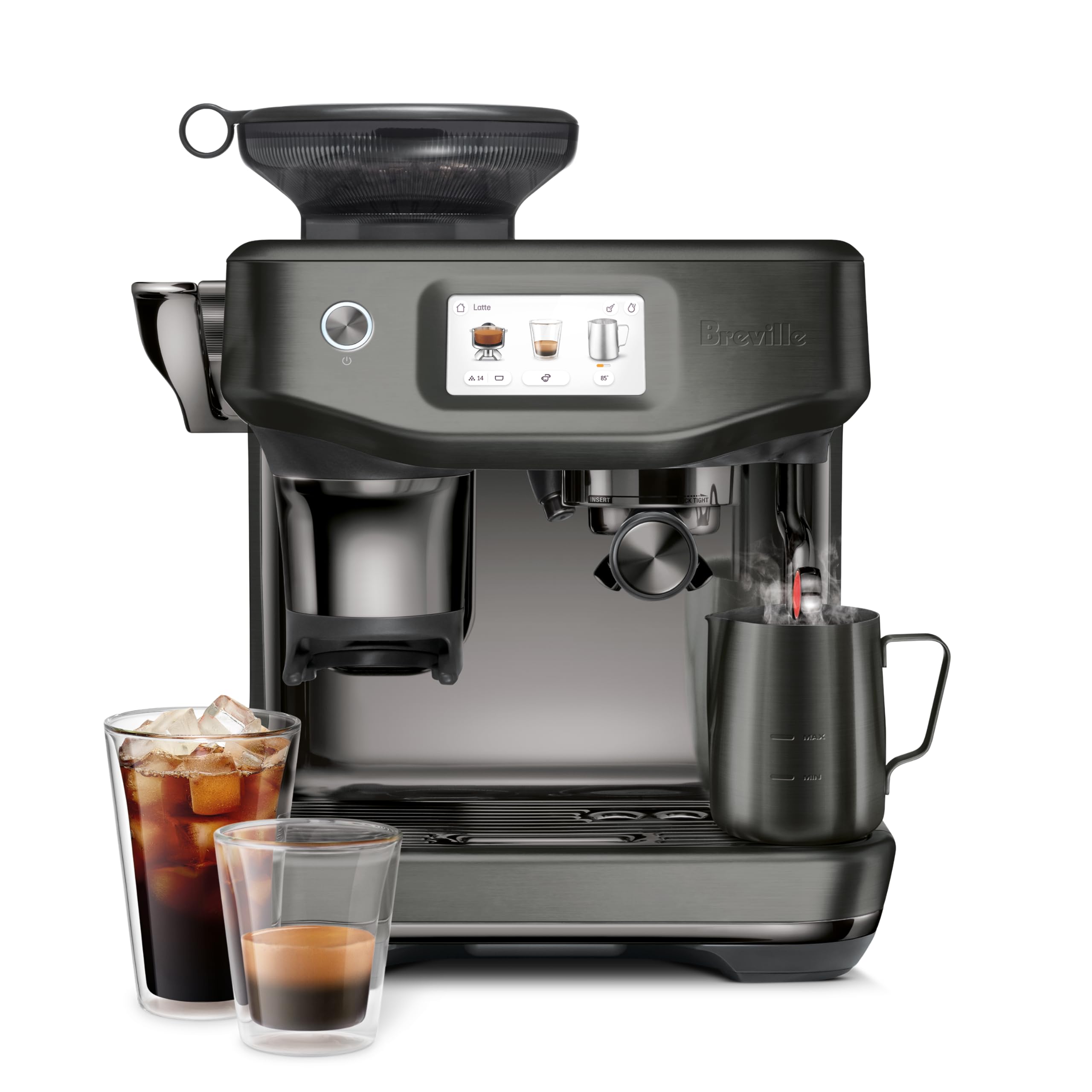
I’d buy this if you want fast heat-up, guided shots, and hands-free milk steaming. Just be ready for some reliability trade-offs over time.
Pros
- Fast 3-second heat-up so you can make a drink right away.
- Guided touchscreen and assisted tamping make dialing in shots easier.
- Auto steam wand gives smooth microfoam without constant babysitting.
Cons
- I noticed a few reliability issues reported after months of use.
- Grinder and dosing take some patience to find the sweet spot.
- Higher price, and repairs can be costly if something goes wrong.
I used the Impress for a few weeks and liked how quickly it warmed up. The ThermoJet system really cuts wait time, so I could pull an espresso almost immediately after turning it on.
The touchscreen walks you through grinding, tamping, and extraction. That helped me get consistent shots faster than on other semi-auto machines I’ve tried.
The assisted 22 lb tamp feels solid and the puck system simplified dosing. Milk steaming felt almost hands-free.
Auto MilQ gave me velvety microfoam with little adjustment. The preset alternative milk modes matched oat and almond pretty well.
I saw mixed reports and some small faults after several months, and I had a short-lived hiccup with grind consistency until I tweaked settings. Expect a learning curve and occasional maintenance.
Breville Barista Touch Impress

I’d buy this if you want fast, guided espresso and silky steamed milk with minimal guesswork.
Pros
- Easy, guided workflow that helped me get good shots quickly.
- Fast ThermoJet heat-up; the machine was ready almost instantly.
- Smooth, consistent microfoam from the auto steam wand.
Cons
- Grinder and electronics felt fragile after months of use.
- Machine needs regular cleaning and care to keep performance steady.
- Some temperature and durability reports weren’t consistent in long-term use.
I used this for a few weeks and liked the touchscreen guides. The step-by-step prompts made dialing in shots simple, so I saw good espresso even on the first tries.
The ThermoJet heater actually fired up in seconds. That cut wait time and let me make consecutive drinks faster than older machines I’ve owned.
Auto MilQ produced very smooth milk for lattes and flat whites. The wand’s presets for alternative milks took the guesswork out of steaming non-dairy options.
After a few months of light use, the grinder started acting up for me, and I read several reports of similar issues. I’d advise checking warranties and being ready for occasional maintenance.
Cleaning is regular but manageable. I liked the guided maintenance prompts, though you need to follow them to avoid drift in taste and function.
Barista Touch Impress

I’d buy this if you want fast, hands-free milk steaming and guided shots. Just know some users report durability issues.
Pros
- Easy guided setup and touchscreen make dialing in drinks simple.
- Auto steam wand creates smooth microfoam with little effort.
- Fast heat-up and built-in grinder save time each morning.
Cons
- Some units show reliability problems after months of use.
- Grinder and electronics add complexity if you prefer simple machines.
- Machine is heavy and takes up counter space.
I used the Impress for a week and liked how it walked me through grinds, doses, and tamping. The touchscreen guidance felt like a real coach, and the preset drinks worked without fuss.
Milk texture impressed me. The auto MilQ produced silky foam that poured nicely into lattes.
I could change milk temperature and texture in a few taps and get consistent results. Extraction was quick thanks to the ThermoJet heat-up.
Shots tasted clean when I found the right grind setting, but finding that sweet spot took some trial and error. The machine is bulky and solid—it looks high-end on the counter but needs room and some regular cleaning of the wand and grinder to keep things steady.
If you value convenience and cafe-style milk without learning full barista technique, this machine delivers. Just be aware some owners report long-term issues.
Buying Guide
I look for features that actually fit my daily routine and skill level. Think about what you’ll use the machine for—quick drinks, latte art, or maybe chasing that near-cafe experience at home.
First thing I check is size and counter space. Measure your kitchen, then compare the machine’s dimensions so it fits without blocking outlets or cabinets.
Here’s what I focus on:
- Grinder quality: A decent grinder gives you consistent grounds, which honestly matters more than you’d expect for taste.
- Temperature control: Stable temperature makes espresso taste better and more consistent, no question about it.
- Steam wand or automatic milk: Decide if you want manual steaming for more control or automatic frothing for speed.
- Ease of cleaning: Removable parts and clear maintenance alerts save time and help the machine last longer.
- Programmable settings: Presets help you get repeatable results fast.
Performance versus price is always on my mind. Sure, higher price can mean better materials and durability—though some mid-range models deliver almost everything I want.
I also weigh convenience features:
- Touchscreen or simple buttons: Pick what you’ll feel comfortable using every day. No point in fancy controls if you hate them.
- Water reservoir size: Larger reservoirs mean fewer refills, which is just less hassle.
- Energy-saving modes: These cut down on electricity use if you tend to leave the machine sitting idle.
I read a bunch of user reviews and look for common issues. Recurring problems matter more than the occasional odd complaint.
If I can, I test or watch demos before buying. Seeing the machine in action lets me judge speed, noise, and how easy it’ll be to use day-to-day.
HelloBaby Signal Cam 6 Baby Monitor Review: Is It Secure? - Ruijiayu
6 7 月, 2026 @ 5:43 下午
[…] set up the monitor in minutes. It paired to the parent screen—no apps or Wi‑Fi […]