Best Dual-Purpose Home Cameras for Monitoring Babies AND Pets in 2026 — Top Picks, Features, and Buying Guide
Home cameras that work for both babies and pets make life easier. I use these dual-purpose cameras to check on naps, watch feeding times, and keep an eye on my mischievous pets.
They combine live video, two-way audio, motion and sound alerts, and night vision to cover the basics for both groups.
Video quality, reliable alerts, privacy controls, and mounting flexibility are key. These features really affect safety and how useful the camera is each day.
I looked for cameras with clear video in both day and low light, quick notifications, strong privacy, and easy placement so they work for both babies and pets.
I spent time testing and comparing models to find which ones balance performance, ease of use, and safety best.
Best Dual-Purpose Home Cameras for Monitoring Babies AND Pets
I tried out cameras that do double duty for baby monitoring and pet watching. Here’s my list of the best dual-purpose home cameras for 2026.
Tapo C100 (TP-Link)
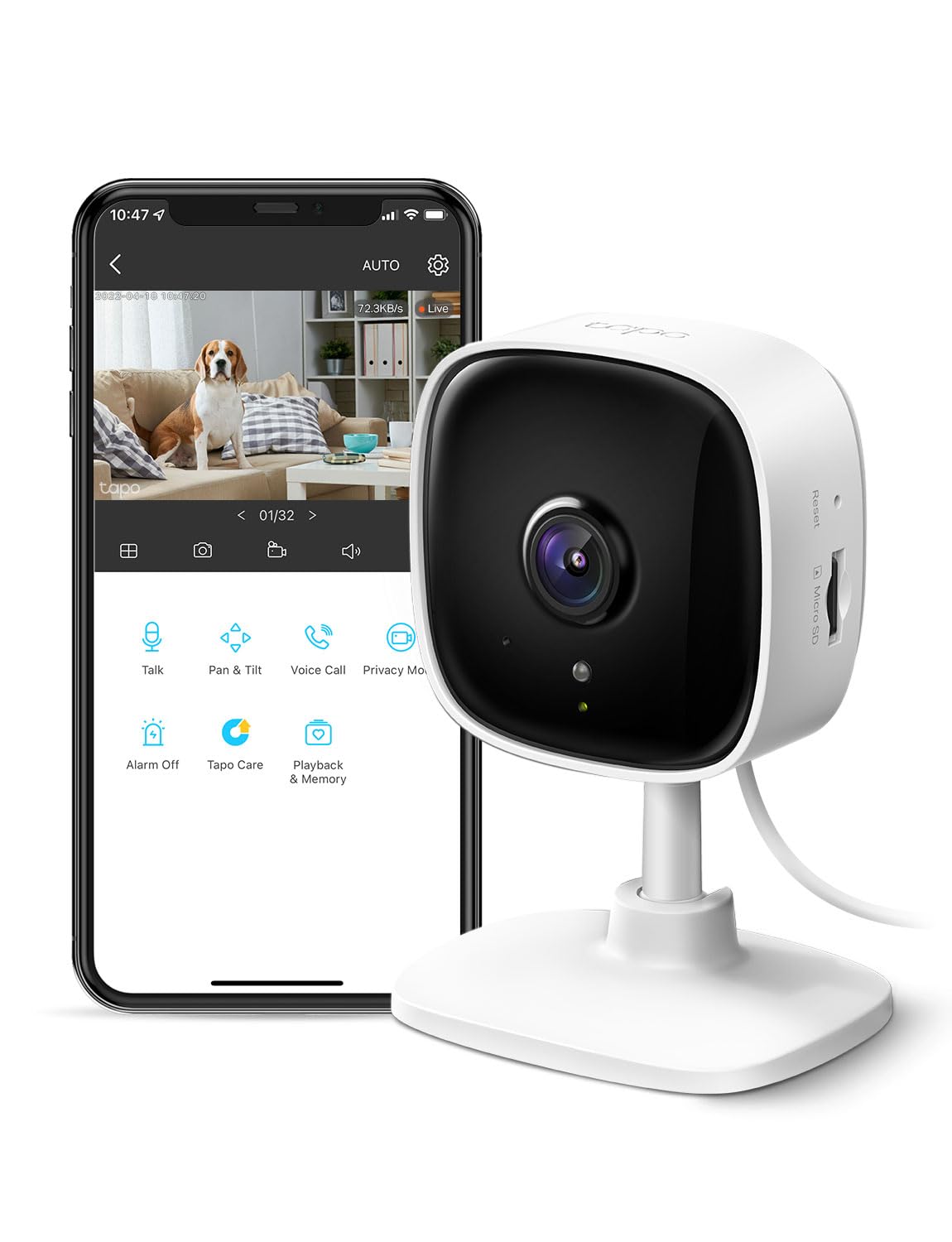
If you want an affordable, easy-to-use monitor that handles both baby sounds and pet check-ins, I’d get this camera.
Pros
- Clear 1080p video that shows small details.
- Solid motion, person, and baby-cry alerts without extra fees.
- Two-way audio and siren let me soothe pets or warn intruders.
Cons
- Continuous cloud recording needs a subscription or an SD card.
- Night view is fine but loses detail past close range.
- Setup on 2.4GHz Wi‑Fi only, which can be limiting in busy homes.
I set this up in a nursery first, then moved it to the living room to watch my dog. The video looks sharp on my phone, and I could read labels on toys, which helped when checking for hazards.
Motion alerts came fast and were mostly useful. It learned to ignore small, repeated pet movements after a few days, which is honestly pretty smart.
Using two-way audio felt natural. I’d call out to my puppy to calm him, and the siren gave me some peace of mind if something felt off.
The app sometimes shows tiny gaps when reviewing footage, so I keep a microSD card in for local recording. Night vision covers a typical room well, but details fade toward the edges.
I like the price and small size. It slips into corners or sits on a shelf without drawing attention. If you need cloud history longer than a few events, plan for Tapo Care or keep a compatible SD card handy.
CINMOORE 2.5K Pet & Baby Camera
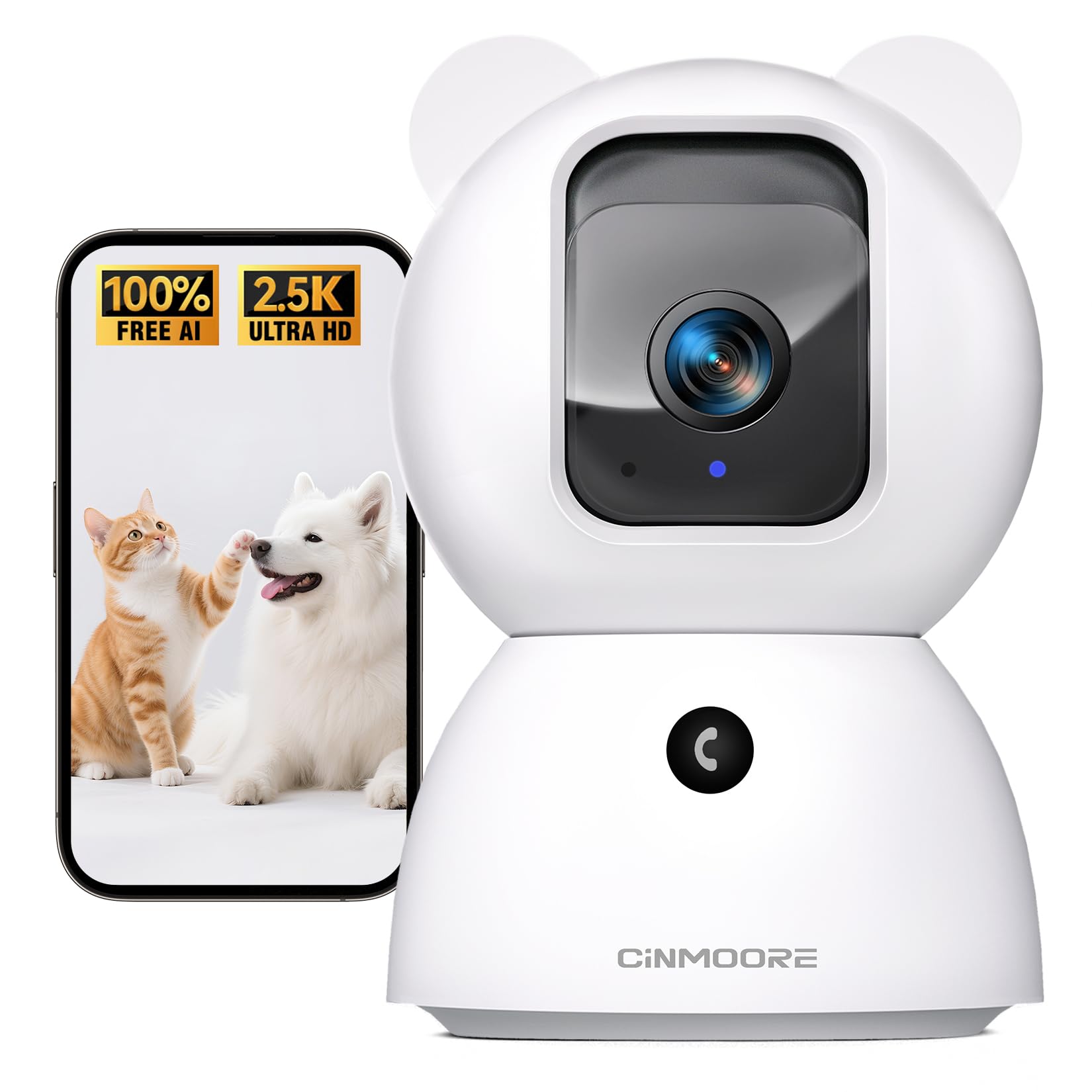
If you want clear video and free local AI alerts for both babies and pets, this is a great pick.
Pros
- Sharp 2.5K picture that made it easy to spot a pacifier or a pet on the couch.
- Free on-device AI alerts for people, pets, and crying—no monthly fee for detections.
- Simple Bluetooth setup and sturdy mounts made moving it between rooms painless.
Cons
- Only 2.4GHz Wi‑Fi works; no 5GHz support.
- Cloud backup costs extra if you want off-site recordings.
- Tilt range felt limited when I tried to aim lower from a shelf.
I used this camera in both my nursery and living room. Video stayed crisp day and night, and color night vision let me see my cat’s face without that usual fuzzy black-and-white look.
The pan/tilt moved smoothly, but I did have to reposition the unit to get a better lower view. The two-way full-duplex audio felt natural when talking to my pet or soothing my baby.
The call button and clear microphone worked well for quick check-ins. I liked that the AI detection ran on the device, so I got alerts without worrying about a recurring fee.
Setup took about two minutes with Bluetooth and my 2.4GHz network. Local SD recording gave me peace of mind, and encrypted SD storage felt secure.
If you need wide Wi‑Fi support or cloud storage with the camera, plan for the subscription and remember the slight tilt limit when mounting.
HelloBaby HB2438 Monitor
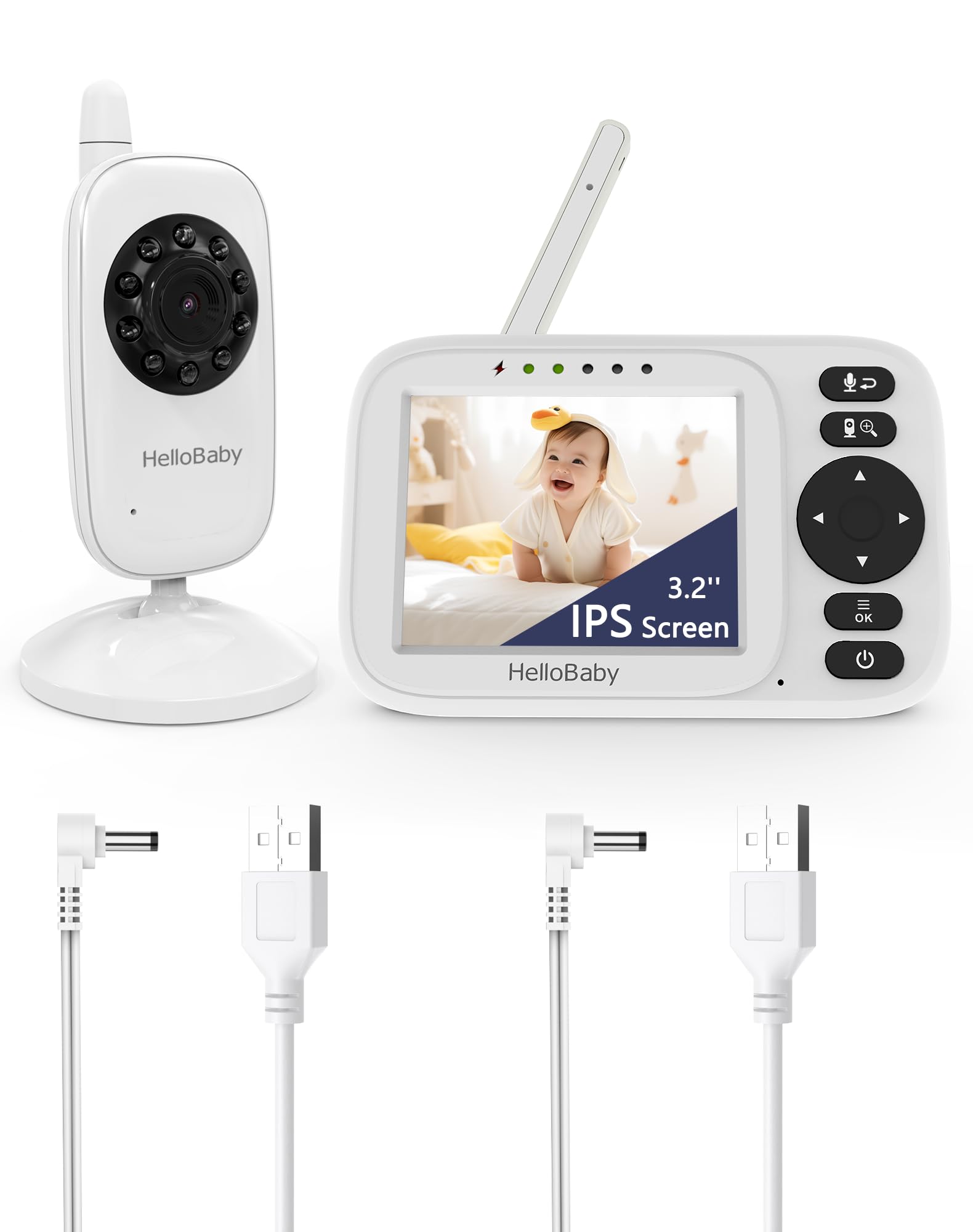
I’d recommend this if you want a simple, no-WiFi monitor that works well for both babies and pets.
Pros
- Easy to set up and move around the house.
- Reliable non‑WiFi connection that feels more private.
- Useful night vision and two-way talk for quick soothing.
Cons
- Screen is small and image quality is modest.
- Power adapter not included for USB charging.
- Lullabies and features are basic compared with premium models.
I used the HB2438 for a few nights with my newborn, then moved it to watch my dog during the day. Setup took minutes—plug in the camera, turn on the parent screen, and the units paired right away.
I liked not needing an app or Wi‑Fi; it just felt private and simple. The two-way talk works well to calm crying or call the pet down from a couch.
Night vision showed clear grayscale images of the crib and yard at low light. The cry alert in ECO/VOX mode saved battery while still waking the screen when needed.
Battery life lasted through evening checks in ECO mode, and the extra 1250 mAh helped compared with older units I’ve owned. Still, the 3.2″ display and 480p image mean details can be grainy when you zoom in, so don’t expect sharp video for identifying small items.
For parents who want straightforward monitoring without smart-home complexity, this unit feels practical and dependable. If you need app features, cloud recording, or higher resolution for pet security, check out more advanced cameras instead.
Buying Guide
I focus on safety, ease, and value when I pick a camera for both babies and pets.
Think about what you need most—live view, alerts, night vision, or audio. Everyone’s priorities are a little different.
I look for video quality first. Go for at least 1080p so you can spot small movements and facial details, otherwise, what’s the point?
Good low-light performance matters for night checks. It’s frustrating when you can’t see anything after dark.
Audio and two-way talk come next for me. Clear sound really helps when you want to soothe a baby or call a pet.
Two-way talk should have low latency and adjustable volume. No one wants to shout or wait for a delayed response.
Motion and sound alerts can make or break daily use. Adjustable sensitivity keeps false alarms from curtains or toys to a minimum.
I prefer cameras that let me set active hours and zones. Customizing this stuff saves a lot of headaches.
Field of view and pan/tilt matter, too. A wide view covers more area, and pan/tilt/zoom helps if you want to follow a pet around.
Though, for stationary baby monitors, pan and tilt might not be necessary. It depends on your setup.
Connectivity and storage options are a big deal. Stable Wi‑Fi is a must, and having local SD or cloud backups is just smart.
Subscription costs for cloud recording can sneak up on you, so check them out before you buy.
Power and placement options make a difference in daily use. Plug-in power is reliable, but battery models give you more flexibility.
Just remember to keep cords out of reach of kids and pets. Safety first, always.
Privacy and security features are non-negotiable for me. Look for encryption, password protection, and regular firmware updates.
I like devices that let me control who can access the feed. You don’t want surprises there.
Size, mounting, and build quality all play a role. Small, sturdy units just work better around pets, and simple mounting makes setup less of a chore.
Honestly, I just make a checklist: video quality, audio, alerts, field of view, storage, power, security, and mounting. It keeps things practical and stops me from getting distracted by flashy features I don’t need.